Specialized Insoles for Athletes: Unlocking Performance and Preventing Injury

Discover specialized shoe inserts designed for unique foot conditions and activities. From plantar fasciitis relief to sports performance enhancement,our orthotics provide targeted support,improved alignment,and customized comfort for your specific needs.
Specialized Insoles for Athletes: Unlocking Performance and Preventing Injury
Table of Contents
- Beyond Basic Cushioning: The Science of Athletic Insoles
- Core Benefits: What Specialized Insoles Deliver
- Types of Specialized Insoles by Sport
- The Athlete's Guide to Choosing the Right Insole
- Expert Roundtable: Insights from Sports Medicine
- FAQs for the Athletic Community
- Conclusion: Step Up Your Game
Beyond Basic Cushioning: The Science of Athletic Insoles
For the competitive athlete, every component of gear matters. Specialized athletic insoles are engineered components that go far beyond the simple foam pads found in standard shoes. They are biomechanical tools designed to interact dynamically with the foot's anatomy during high-stress activities. The primary purpose of these insoles is to optimize the kinetic chain—the sequence of movements from foot strike through the legs, hips, and core. By providing precise arch support, heel stabilization, and metatarsal control, they correct inefficient foot placements that can sap energy and lead to overuse injuries.
Core Benefits: What Specialized Insoles Deliver
1. Enhanced Performance and Power Transfer
Insoles with a semi-rigid or carbon-fiber shell create a stable platform. This stability prevents the arch from collapsing excessively upon impact, allowing for more efficient energy return and a powerful toe-off. Runners may experience a more propulsive stride, while basketball players can benefit from a solid base for cutting and jumping.
2. Proactive Injury Prevention
This is the cornerstone benefit. Specialized insoles mitigate the root causes of common athletic ailments:
- Plantar Fasciitis: Supported arches reduce strain on the plantar fascia ligament.
- Shin Splints: Proper alignment lessens the pull of muscles on the shin bone.
- Stress Fractures: Improved shock absorption disperses impact forces away from vulnerable bones.
- Achilles Tendonitis: Heel cups and slight heel lifts can reduce tension on the Achilles.
3. Improved Stability and Balance
By cradling the heel and midfoot, these insoles enhance proprioception (the body's sense of position). This leads to better balance on uneven terrain for trail runners or during lateral movements for soccer and tennis players, potentially reducing ankle sprains.
4. Customized Comfort for Extended Training
Advanced materials like dual-density foams, temperature-sensitive gels, and moisture-wicking fabrics manage pressure, heat, and sweat. This translates to reduced hot spots, blisters, and fatigue, enabling longer, more focused training sessions.
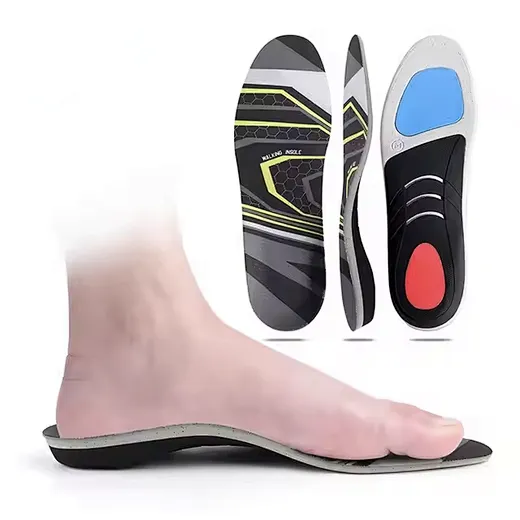
Our Premium Support & Cushioning Insole. Meticulously engineered with a combination of PU, TPU, and Poron materials, it delivers exceptional arch support and superior shock absorption. This design not only stabilizes your stride but also effectively dissipates impact, making it the ideal choice for all-day comfort and injury prevention during rigorous activities.
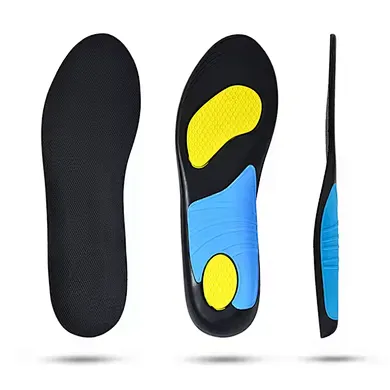
For those who prioritize maximum cushioning against high-impact forces, our Ultra Shock Absorption Insoles are the perfect match. They are specifically designed to handle the intense pressure from running, jumping, or long periods on your feet, providing a plush, protective barrier that reduces fatigue.
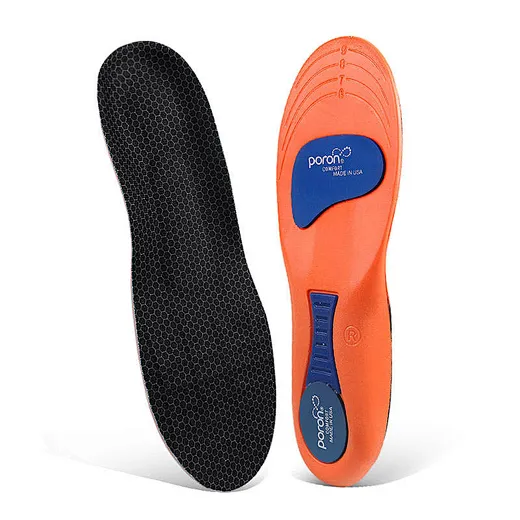
Finally, we offer the High-Impact & Moisture-Wicking Insoles, which masterfully combine advanced buffering technology with breathable, sweat-absorbent materials. This duo ensures your feet stay cool, dry, and comfortable even during the most demanding workouts or in warm conditions, offering both relentless cushioning and superior climate control.


Types of Specialized Insoles by Sport
Running and Trail Running Insoles
Focus: Shock absorption and forward propulsion. They often feature a deep heel cup for rearfoot stability and a flexible forefoot for natural toe-off. Trail-specific versions may have added lateral support.
Court Sport Insoles (Basketball, Tennis, Volleyball)
Focus: Impact protection from jumps and torsional control for rapid side-to-side movements. They are typically thicker in the forefoot and heel to handle high vertical loads.
Cycling Insoles (Footbeds)
Focus: Efficient power transfer and hot spot relief. They are often very thin, stiff, and designed to work with cleats, supporting the arch to prevent it from collapsing and wasting energy during the pedal stroke.
Football/Soccer & Multi-Directional Sport Insoles
Focus: Ankle stability and foot containment within the boot. They support quick cuts and changes in direction, often integrating with the shoe's own support structure.
The Athlete's Guide to Choosing the Right Insole
Step 1: Assess Your Foot Type and Gait
Are you an overpronator (foot rolls inward), supinator (foot rolls outward), or neutral? A gait analysis at a specialty running store or by a podiatrist is invaluable. Match the insole's arch profile and posting (reinforced areas) to your mechanics.
Step 2: Consider Your Primary Activity
Refer to the sport-specific types above. A great running insole may not be optimal for a cycling shoe, and vice versa.
Step 3: Evaluate Materials and Construction
Look for a combination of materials: a firm shell for support and a top layer of premium foam for comfort. Check for features like antibacterial treatment and breathable covers.
Step 4: Fit is Paramount
The insole must fit your shoe perfectly. Most are trimmable. Ensure it doesn't crowd the toe box or lift your heel excessively, which can alter shoe fit and cause new problems.
Expert Roundtable: Insights from Sports Medicine
Dr. Maya Rodriguez, DPM, Sports Podiatrist: "I see many athletes trying to push through pain with generic support. The right specialized insole acts as an intervention device. For a runner with moderate overpronation, a quality over-the-counter insole with medial posting can be as effective as a custom orthotic for injury prevention, at a fraction of the cost."
Alex Chen, CSCS, Strength Coach for Elite Triathletes: "We treat insoles as part of the athlete's performance toolkit. In cycling, we use rigid carbon footbeds to ensure every watt of power from the hip and knee drives straight through the pedal. It's not just comfort; it's mechanical efficiency."
FAQs for the Athletic Community
1. Can't I just use the insoles that came with my shoes?
Stock insoles are primarily for basic comfort and finishing the shoe's interior. They are not biomechanically designed for sport-specific support and break down quickly under athletic stress.
2. How often should I replace my athletic insoles?
For serious athletes, every 6-9 months, or 300-500 miles of running. Signs of wear include flattened cushioning, loss of arch shape, and visible creasing.
3. Are custom orthotics better than premium over-the-counter insoles?
Custom orthotics are essential for significant structural abnormalities or complex medical conditions. However, many high-end over-the-counter insoles offer adjustable, sport-specific support that is perfectly adequate for most athletes seeking performance gains and injury prevention.
4. Will thick, cushioned insoles slow me down?
Not necessarily. The right cushioning manages impact without being mushy. The key is the balance between responsive cushioning and a firm, supportive base that doesn't trap energy.
5. Can insoles help with knee or hip pain?
Absolutely. Pain in the knees (especially patellofemoral pain) or hips can originate from faulty foot mechanics. Correcting alignment at the foot with insoles can have a positive chain-reaction effect up the entire leg.
Conclusion: Step Up Your Game
Specialized insoles for athletes represent a critical, yet often overlooked, intersection of sports science and equipment. They are a proactive investment in both peak performance and long-term athletic health. By providing targeted support, enhancing efficiency, and dispersing damaging impact forces, they allow athletes to train harder, recover faster, and compete with greater confidence. Whether you're a weekend warrior or a seasoned competitor, taking the time to select the right insole is a simple step that can yield significant returns on your investment in sweat and effort.


The Advantages of PU Insoles: Why They're a Top Choice for Comfort
The Best Candidates for Cushioned Insoles: Who Needs Them Most? Discover how cushioned insoles can transform comfort, performance, and foot health for these specific groups