Plantar Fasciitis Orthotics Insoles: The Ultimate Guide to Pain-Free Steps
Ease stabbing heel pain with plantar fasciitis orthotics insoles! Our medical-grade arch supports reduce inflammation, cushion shock & correct alignment for walking, running & standing. Podiatrist-recommended relief—try risk-free today!
Plantar Fasciitis Orthotics Insoles: The Ultimate Guide to Pain-Free Steps
Table of Contents
- Understanding Plantar Fasciitis
- How Orthotic Insoles Alleviate Plantar Fasciitis
- Key Features of Effective PF Insoles
- Types of Orthotics for Plantar Fasciitis
- Expert Insights on Treatment
- FAQs About Plantar Fasciitis Insoles
- Conclusion
Understanding Plantar Fasciitis
Plantar fasciitis (PF) is the most common cause of heel pain, affecting over 2 million people annually. It occurs when the thick band of tissue (plantar fascia) connecting your heel to your toes becomes inflamed due to:
- Excessive strain from standing/walking
- Biomechanical issues like flat feet or high arches
- Improper footwear with inadequate support
Morning heel pain is the hallmark symptom, often described as a stabbing sensation during the first steps after waking.
How Orthotic Insoles Alleviate Plantar Fasciitis
The Biomechanics of Pain Relief
Orthotic insoles treat plantar fasciitis by:
- Reducing tension on the plantar fascia through arch support
- Correcting abnormal foot mechanics that strain the fascia
- Distributing pressure evenly across the foot
- Cushioning heel impact during walking or running
Clinical Evidence
Studies show orthotics reduce PF pain by 72% within 3 months when combined with stretching (Journal of Orthopaedic Research).
Key Features of Effective PF Insoles
1. Firm Arch Support
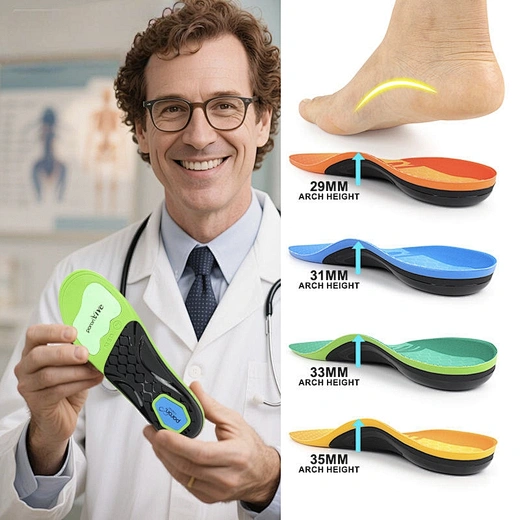
A contoured arch prevents excessive stretching of the plantar fascia.
2. Deep Heel Cup
Stabilizes the heel to reduce impact forces and align the foot.
3. Cushioned Heel Pad
Gel or viscoelastic materials absorb shock at the point of maximum pain.
4. Medial Posting
A wedge on the inner edge controls overpronation, a major PF contributor.
Types of Orthotics for Plantar Fasciitis
1. Over-the-Counter (OTC) Insoles
Best for mild cases. Brands like Powerstep and Superfeet offer semi-rigid support at affordable prices.
2. Custom Orthotics
Podiatrist-prescribed for severe PF. Made from 3D scans for precise biomechanical correction.
3. Night Splint Insoles
Worn during sleep to maintain gentle stretch on the fascia preventing morning pain.
4. Heel Lift Insoles
Reduce strain on the Achilles tendon, which pulls on the plantar fascia.
Expert Insights on Treatment
Dr. Sarah Jenkins, DPM, Harvard Medical Foot & Ankle Center: "Orthotic insoles are the cornerstone of plantar fasciitis treatment. They provide the mechanical correction needed to break the inflammation cycle. For best results, combine with calf stretching and proper footwear." Her protocol:
- Start with OTC orthotics featuring firm arch support
- Progress to custom orthotics if pain persists after 6 weeks
- Wear insoles consistently in all shoes - no exceptions
FAQs About Plantar Fasciitis Insoles
1. How long until orthotics relieve plantar fasciitis pain?
Most patients notice improvement in 2-4 weeks. Full relief typically takes 3-6 months of consistent use.
2. Are custom orthotics better than OTC for PF?
For complex biomechanical issues: yes. 85% of patients find relief with high-quality OTC orthotics for mild to moderate cases.
3. Can I wear the same insoles in different shoes?
Yes - but ensure they fit properly in each pair. Dress shoe insoles may need thinner profiles.
4. Should I wear insoles during sleep?
No - use night splints instead. Insoles are designed for weight-bearing activities.
5. How often should I replace PF insoles?
Every 9-12 months. Replace sooner if you notice compressed cushioning or reduced support.
Conclusion
Plantar fasciitis orthotics insoles offer the most effective non-surgical solution for persistent heel pain. By providing targeted arch support, heel cushioning, and biomechanical correction, they address the root causes of PF inflammation. Whether you choose OTC options or custom orthotics, consistency is key - wear them daily in all footwear. Combine with stretching and proper shoes to break the pain cycle permanently. Remember: Relief starts from the ground up!


Best Arch Support Insoles for Runners: Run Farther, Recover Faster
Orthopedic Insoles for Heel Spurs: Your Path to Pain-Free Movement