Are Your Shoes Killing Your Feet? Why You Need Arch Support Insoles

Discover how custom made arch supports provide personalized relief for flat feet and plantar fasciitis. Unlike generic options, these tailor-made orthotics align with your unique foot structure for lasting comfort and improved stability.
Are Your Shoes Killing Your Feet? Why You Need Arch Support Insoles
In this article
- Introduction: the silent suffering of feet
- The Forgotten Arch: why it matters
- 5 Signs Your Shoes Are Wrecking Your Feet
- What Are Arch Support Insoles?
- Key Benefits of Using Arch Support Insoles
- Choosing the Right Insole (by arch type)
- Expert opinion: podiatrist Dr. Elena Martis
- Common Myths About Insoles
- Industry FAQ – your questions answered
- Conclusion: step into comfort
Introduction: the silent suffering of feet
Every day, your feet absorb hundreds of tons of force. Yet most of us cram them into fashionable but unsupportive shoes—thin soles, zero arch contour, flimsy materials. Over time, this neglect leads to fatigue, pain, and structural damage. The truth is harsh: your shoes might be slowly "killing" your feet. The solution isn't necessarily to throw away your favourite footwear, but to upgrade them with arch support insoles. These unassuming inserts can reverse damage, prevent injury, and transform how you feel on your feet.
The Forgotten Arch: why it matters
Your foot's arch is a natural shock absorber. It distributes body weight, maintains balance, and stores elastic energy during walking. When shoes lack arch support, the arch flattens (overpronation) or is strained, pulling on the plantar fascia and Achilles tendon. This can trigger plantar fasciitis, shin splints, knee pain, and even lower back issues. Proper arch support insoles cradle the arch, restoring its natural position and allowing muscles to function as intended.
The biomechanical chain reaction
Without arch support, every step sends improper impact up the kinetic chain. Ankles tilt inward, knees rotate, hips compensate. Arch support insoles realign the entire posterior chain. According to biomechanist Dr. Robert Lang, "supporting the arch is like tuning a piano — suddenly everything works in harmony."
5 Signs Your Shoes Are Wrecking Your Feet
Not sure if your current shoes are offenders? Watch for these red flags:
- Pain along the bottom of the foot – especially morning heel pain (classic plantar fasciitis).
- Aching arches after standing – your foot muscles are overworked trying to stabilise.
- Frequent ankle sprains or instability – flat arches reduce lateral stability.
- Knee or hip discomfort – often originates from unsupported feet.
- Visible wear on shoe soles – if the inner side wears faster, you likely overpronate and need arch support insoles.
What Are Arch Support Insoles?
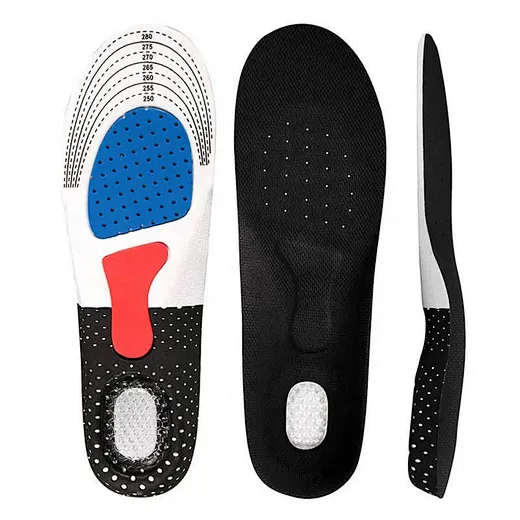
Arch support insoles are footbeds designed to replace the flimsy liner that comes with most shoes. They feature a raised contour that fills the arch void, plus deep heel cups to stabilise the fat pad. Unlike generic "cushion" insoles, true arch supports are semi-rigid or structured to resist collapsing under weight. They are made from materials like polypropylene, carbon fiber, or high-density EVA, often with a top layer of breathable foam. These insoles are not just for people with flat feet; even high-arched individuals benefit from gentle support that prevents excessive supination.
Key Benefits of Using Arch Support Insoles
Adding arch support insoles to your everyday shoes (sneakers, work boots, casual loafers) brings tangible improvements:
- Pain reduction – immediate relief from arch and heel pain by offloading fascia tension.
- Improved alignment – reduces stress on knees, hips, and lower back.
- Enhanced endurance – you can stand and walk longer without fatigue.
- Prevents deformities – slows progression of bunions, hammertoes, and plantar fasciosis.
- Extends shoe life – insoles absorb shock, so your shoes don't break down as fast.
Choosing the Right Insole (by arch type)
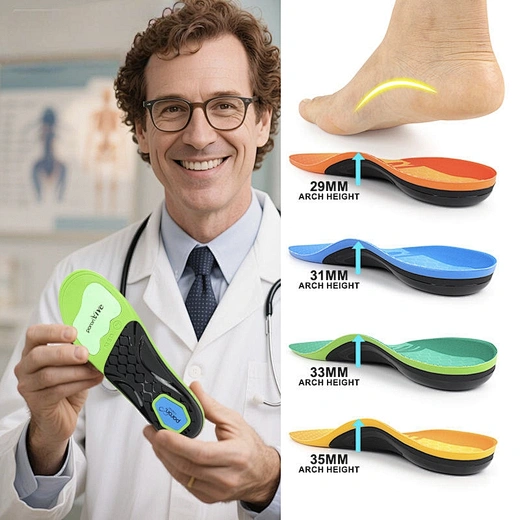
Not all feet are the same. Selecting the correct insole depends on your arch profile. Do the "wet test": wet your foot and step on paper. If you see a complete imprint, you have low arches (flat feet) and need motion-control insoles with maximum arch filling. If you see a narrow band, you have normal arches and can use semi-rigid supports. If only the ball and heel show (very narrow connection), you have high arches and require cushioned insoles with deep heel cups to absorb shock.
Low arch (flat foot)
Choose arch support insoles with firm medial posting (a wedge under the arch) to prevent overpronation. Look for rigid shells.
Neutral arch
You can use flexible, semi-custom supports that follow the natural curve. A good balance of cushion and contour works best.
High arch
Opt for shock-absorbing insoles with a deep heel cup but not aggressive arch lift; you need to fill the space without pushing up too hard.


Expert opinion: podiatrist Dr. Elena Martis
“I tell my patients: your shoes are the foundation of your body. Without proper arch support, you’re building your house on sand. Arch support insoles are not an accessory — they’re preventive medicine. In my 20 years of practice, I’ve seen people resolve chronic knee pain simply by adding structured insoles into their sneakers and work shoes. The key is consistency: wear them daily, and give your feet the scaffolding they deserve.” — Dr. Elena Martis, DPM, American Podiatric Medical Association member.
Common Myths About Insoles
Myth 1: “Insoles are only for old people.” False — young athletes, nurses, and office workers all benefit. Myth 2: “My shoes have built-in arch support.” Most cheap footwear has minimal support that flattens quickly. Myth 3: “Insoles will make my feet weaker.” On the contrary, they allow muscles to function without overstrain, preventing fatigue. Myth 4: “All insoles are the same.” Wrong — drugstore foam pads differ drastically from custom-grade arch support insoles.
Industry FAQ – your questions answered
❓ Can I use arch support insoles in any shoe?
Yes, but shoes with removable insoles are ideal. For tight shoes, you may need to remove the original liner. Some dress shoes accommodate low-profile arch support insoles specifically made for thin spaces.
❓ How long does it take to adjust to arch supports?
Typically 3–10 days. Start by wearing them 2 hours, then gradually increase. Your foot muscles are being retrained — mild soreness is normal but should fade.
❓ Do I need a prescription for good arch support?
Not necessarily. Over-the-counter arch support insoles from reputable brands work for most people. If you have severe deformities or neuropathy, consult a podiatrist for custom orthotics.
❓ How often should I replace my insoles?
Every 6–12 months depending on usage. If you notice the arch collapsing or the material compressing, it's time for new ones. Rotating between two pairs can extend life.
❓ Can insoles help with back pain?
Absolutely. Studies show that arch support insoles improve pelvic alignment and reduce lumbar strain, especially for people who stand long hours.
Conclusion: step into comfort
Your feet carry you through life — don't let your shoes sabotage them. The evidence is overwhelming: arch support insoles are a simple, affordable intervention that can rescue your feet from chronic pain, realign your body, and boost your daily energy. Whether you're a runner, a teacher, or a desk worker, quality insoles make the difference between surviving in your shoes and thriving in them. Take the first step today: pull out the flimsy factory insole and replace it with proper support. Your feet (and your spine) will thank you.


Heel Pain Be Gone: The Role of Deep Heel Cups in Orthotic Insoles
The 4 Most Common Foot Problems Solved by Orthotic Inserts