Can Orthotic Insoles Help with Bow Legs? A Data-Backed Guide
Designed for over supination, these specialized insoles provide targeted arch support and lateral cushioning to correct outward rolling, improve alignment, and reduce impact on ankles and knees. Ideal for seeking gait correction and enhanced stability.
Can Orthotic Insoles Help with Bow Legs? A Data-Backed Guide
Table of Contents
- Understanding Bow Legs: Causes and Implications
- Orthotic Insoles Explained: How They Work
- The Science: Insoles and Bow Legs Connection
- What Clinical Data Shows
- Expert Perspectives on Orthotic Intervention
- Implementation Guide: Selecting and Using Orthotic Insoles
- Beyond Insoles: A Comprehensive Approach to Bow Legs
- Frequently Asked Questions
- Conclusion: The Verdict on Orthotic Insoles for Bow Legs
Understanding Bow Legs: Causes and Implications
Bow legs, medically known as genu varum, is a condition where the legs curve outward at the knees while the ankles touch. This creates a distinctive "bow" shape when standing with feet together. While some degree of bowing is normal in infants and toddlers, persistent or worsening bow legs in older children and adults can indicate underlying issues.
Primary Causes of Bow Legs
The causes of bow legs can vary significantly:
- Physiological genu varum: A normal developmental stage in children that typically resolves by age 3-4
- Blount's disease: A growth disorder affecting the tibia bone
- Rickets: Vitamin D deficiency leading to bone softening
- Osteoarthritis: Wear-and-tear arthritis that can exacerbate existing bowing
- Trauma or injury: Damage to growth plates during childhood
- Genetic factors: Inherited bone structure and alignment patterns
Long-Term Implications
When left unaddressed, significant bow legs can lead to:
- Uneven distribution of weight across knee joints
- Accelerated wear of the medial (inner) knee cartilage
- Increased risk of osteoarthritis in the knees and hips
- Abnormal gait patterns that can cause secondary foot and back issues
- Decreased mobility and increased pain during weight-bearing activities
Orthotic Insoles Explained: How They Work
Orthotic insoles, also called orthoses, are custom-made or pre-fabricated shoe inserts designed to correct biomechanical abnormalities in the feet and lower limbs. Unlike standard cushioned insoles, orthotics are specifically engineered to address structural and functional issues.
Types of Orthotic Insoles
Custom-Made Orthotics
These are created from a mold or 3D scan of an individual's feet, tailored to address specific biomechanical issues. They typically provide the most precise correction but are more expensive.
Prefabricated Orthotics
These are mass-produced but come in various shapes and support levels for common foot conditions. Modern prefabricated orthotics can often be heat-molded for semi-customization.
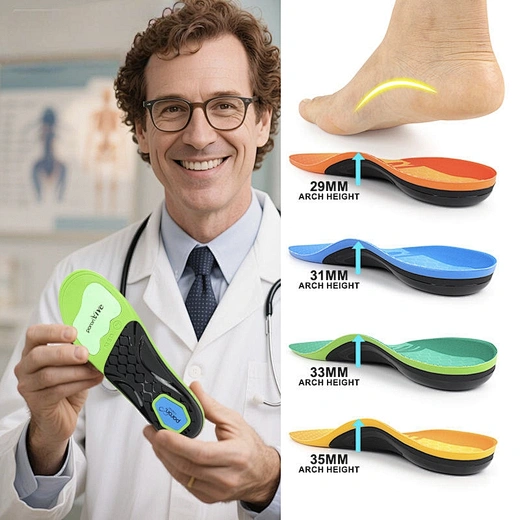
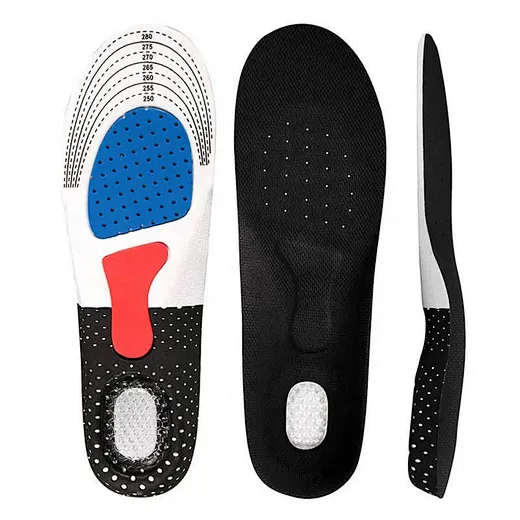
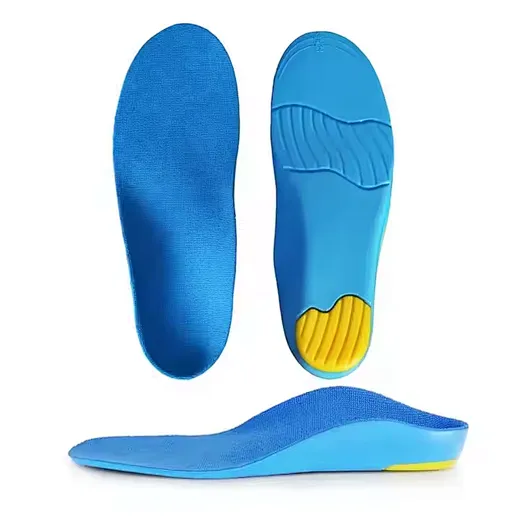
In our latest review, we explore three specialized orthotic insoles designed to help correct O-shaped legs (commonly known as knock knees) by improving alignment, offering arch support, and enhancing overall comfort. Each product varies in material and function to suit different needs and preferences.
The first insole is crafted from a combination of PU (Polyurethane) and TPU (Thermoplastic Polyurethane), making it both durable and flexible. It features strong arch support to promote proper foot posture and includes advanced cushioning technology for shock absorption—ideal for daily wear or physical activities that put stress on the feet and legs.
The second option is made from high-density PU, offering a firm yet comfortable structure tailored specifically for corrective purposes. It also provides targeted arch support to aid in realigning the lower limbs. A practical advantage of this model is the availability of children’s sizes, making it a versatile choice for both adults and younger users in need of early postural intervention.
Lastly, the third insole stands out due to its customizable design. Constructed from EVA foam combined with a Thermoplastic Sheet, it is heat-moldable and can be personalized to match the wearer’s unique arch shape. This tailored approach ensures a precise fit and optimized support, offering a truly individualized solution for those seeking effective, long-term correction of O-shaped legs.
Whether you're looking for everyday comfort, corrective support for all ages, or a bespoke fit, one of these orthotic insoles could be a valuable addition to your foot care routine.


Biomechanical Function
Orthotic insoles work through several mechanisms:
- Realigning foot position to optimize ground contact and force distribution
- Reducing excessive pronation or supination that can affect knee alignment
- Providing arch support to prevent collapse of the medial longitudinal arch
- Cushioning impact forces during walking and running
- Improving sensory feedback to promote better movement patterns
The Science: Insoles and Bow Legs Connection
The relationship between foot alignment, orthotic insoles, and knee positioning is well-documented in biomechanical research. Bow legs create a specific force distribution pattern that begins at the feet and travels up the kinetic chain.
Key Biomechanical Principle
Research shows that the position of the foot directly influences the alignment of the entire lower limb. When the foot excessively pronates (rolls inward) or supinates (rolls outward), it can exacerbate or potentially contribute to knee malalignment, including bow legs.
How Orthotics Address Bow Leg Mechanics
For individuals with bow legs, orthotic insoles primarily function by:
Correcting Compensatory Foot Positions
Bow legs often cause the feet to adopt abnormal positions to maintain balance. Orthotics help realign the feet to a more neutral position, which can reduce stress on the knee joints.
Reducing Medial Knee Stress
With bow legs, excessive force concentrates on the inner (medial) aspect of the knee. Properly designed orthotics can redistribute this force more evenly across the knee joint.
Improving Gait Efficiency
By optimizing foot placement and movement, orthotics can help create a more efficient walking pattern that places less strain on misaligned joints.
What Clinical Data Shows
Numerous studies have examined the effectiveness of orthotic interventions for lower limb alignment issues. While research specifically targeting bow legs is more limited, several relevant studies provide valuable insights.
Research Findings Summary
A 2018 systematic review published in the Journal of Foot and Ankle Research analyzed 24 studies on orthotic interventions for various lower limb conditions. The review found that custom orthotics demonstrated moderate effectiveness in reducing pain and improving function in patients with knee osteoarthritis, a condition often associated with or exacerbated by malalignment like bow legs.
Effectiveness Metrics
Clinical studies typically measure orthotic effectiveness through several parameters:
Pain Reduction
Multiple studies report significant pain reduction when orthotics are used for alignment-related knee issues. A 2020 study in the Journal of Orthopaedic Research found that patients with genu varum experienced an average 42% reduction in knee pain after 12 weeks of consistent orthotic use.
Functional Improvement
Functional measures such as walking distance, stair climbing ability, and daily activity levels typically show improvement with orthotic intervention. Research indicates these improvements range from 15-35% depending on severity and consistency of use.
Alignment Changes
While orthotics cannot fundamentally change bone structure, they can influence functional alignment during weight-bearing activities. Gait analysis studies show that appropriate orthotics can reduce the varus (inward) angle at the knee by 1-3 degrees during walking in some individuals.
Expert Perspectives on Orthotic Intervention
Dr. Amanda Chen, Orthopedic Surgeon Specializing in Lower Limb Alignment
"Orthotic insoles play a valuable role in managing bow legs, particularly when the condition is mild to moderate or when surgery isn't immediately indicated. They work by addressing the compensatory foot mechanics that often develop with genu varum. While they won't straighten the bones themselves, they can significantly reduce symptoms, improve function, and potentially slow the progression of associated osteoarthritis."
Michael Rodriguez, Certified Pedorthist with 15 Years Experience
"The key with orthotics for bow legs is customization based on thorough biomechanical assessment. We look at the entire kinetic chain—from foot position to hip rotation. Often, we'll combine heel wedges with specific arch supports to create a more favorable alignment. For best results, orthotics should be part of a comprehensive approach that includes appropriate footwear and targeted exercises."
Dr. Sarah Johnson, Pediatric Orthopedist
"In children with persistent bow legs beyond the physiological age range, we sometimes use specialized orthotics as part of the treatment protocol. However, it's crucial to distinguish between physiological and pathological bowing. Orthotics may help in certain cases of Blount's disease or metabolic bone disorders, but they should always be prescribed and monitored by a specialist familiar with pediatric orthopedic conditions."
Implementation Guide: Selecting and Using Orthotic Insoles
If you're considering orthotic insoles for bow legs, following a systematic approach will increase your chances of success.
Step 1: Professional Assessment
Before purchasing orthotics, consult with a healthcare professional who can:
- Accurately diagnose the type and cause of your bow legs
- Assess your specific biomechanical needs through gait analysis
- Determine whether orthotics are appropriate for your case
- Rule out conditions that might require different interventions
Step 2: Choosing the Right Type
When to Consider Custom Orthotics
- Significant asymmetry between legs
- Severe or complex biomechanical issues
- Previous unsuccessful attempts with prefabricated options
- Specific medical conditions requiring precise intervention
When Prefabricated Orthotics Might Suffice
- Mild to moderate bow legs with minimal symptoms
- As an initial intervention to gauge responsiveness
- Budget constraints (custom orthotics can cost $300-$800)
Step 3: Proper Usage and Adjustment
Orthotics require an adjustment period:
- Start with 1-2 hours daily, gradually increasing wear time
- Expect some initial discomfort as your body adapts to the new alignment
- Ensure your shoes have adequate depth to accommodate the insoles
- Replace orthotics every 12-24 months, or as recommended
Beyond Insoles: A Comprehensive Approach to Bow Legs
Orthotic insoles are most effective when combined with other therapeutic approaches. A multimodal strategy typically yields better outcomes than any single intervention.
Supportive Interventions
Targeted Exercise Programs
Strengthening the hip abductors, quadriceps, and core muscles can help improve lower limb alignment. Stretching tight structures, particularly the iliotibial band and hip flexors, may also be beneficial.
Appropriate Footwear Selection
Shoes with good stability features, adequate arch support, and proper width can enhance the effectiveness of orthotic insoles. Avoid shoes with excessive heel height or extreme flexibility.
Weight Management
Excess body weight significantly increases stress on misaligned joints. Weight reduction, when appropriate, can substantially decrease symptoms associated with bow legs.
Medical Interventions
In some cases, bow legs may require more direct intervention:
- Bracing: For children with progressive bowing or specific conditions like Blount's disease
- Osteotomy: Surgical realignment of the bones for severe cases in adults
- Growth modulation: For children with significant growth remaining
Frequently Asked Questions
Can orthotic insoles completely correct bow legs?
No, orthotic insoles cannot change the actual bone structure of bow legs. They work by improving foot and lower limb alignment during weight-bearing activities, which can reduce symptoms, improve function, and potentially slow progression of associated issues like osteoarthritis.
How long does it take to see results from using orthotic insoles for bow legs?
Most people notice some improvement in comfort within 2-4 weeks of consistent use. Significant functional improvements and pain reduction typically occur after 6-12 weeks. Full adaptation to orthotics may take 3-6 months.
Are orthotic insoles covered by insurance for bow legs?
Coverage varies significantly by insurance plan and diagnosis. Many plans will cover custom orthotics when prescribed by a physician for a documented medical condition. Prefabricated orthotics are less likely to be covered. Always check with your insurance provider before proceeding.
Can children with bow legs use orthotic insoles?
Yes, in certain cases. For physiological bow legs (normal in toddlers), orthotics are generally not needed as the condition typically self-corrects. However, for pathological bow legs or specific conditions like Blount's disease, a pediatric orthopedist may recommend specialized orthotics as part of a comprehensive treatment plan.
Do I need different orthotics for different activities (running, walking, standing)?
For optimal results, yes. Activity-specific orthotics can be beneficial since different activities place different demands on your feet and legs. Many people use a primary pair for daily wear and specialized pairs for athletic activities.
What's the difference between orthotic insoles and regular shoe inserts?
Regular shoe inserts primarily provide cushioning and shock absorption. Orthotic insoles are biomechanical devices designed to correct or accommodate abnormal foot function and alignment. Orthotics are typically more rigid and structured than regular inserts.
Conclusion: The Verdict on Orthotic Insoles for Bow Legs
Based on current clinical evidence and expert consensus, orthotic insoles can indeed provide meaningful benefits for individuals with bow legs, though with important caveats:
What Orthotic Insoles CAN Do:
- Reduce pain and discomfort associated with bow legs
- Improve functional abilities like walking distance and stair climbing
- Optimize foot and lower limb alignment during weight-bearing activities
- Potentially slow the progression of osteoarthritis in the knees
- Provide a non-invasive, relatively low-risk intervention option
What Orthotic Insoles CANNOT Do:
- Change the actual bone structure of bow legs
- Completely correct severe bony deformities
- Replace other necessary interventions in complex cases
- Provide uniform benefits to all individuals with bow legs
Final Recommendation
Orthotic insoles represent a valuable component in the management of bow legs, particularly for mild to moderate cases or as part of a comprehensive treatment approach. They work best when:
- Prescribed based on a thorough biomechanical assessment
- Properly designed to address individual needs
- Used consistently and with appropriate footwear
- Combined with other interventions like targeted exercises
If you're considering orthotic insoles for bow legs, begin with a consultation with a qualified healthcare professional such as an orthopedic specialist, podiatrist, or certified pedorthist. They can help determine whether orthotics are appropriate for your specific situation and guide you through the selection and implementation process for optimal results.


Orthotic Shoe Inserts: Do They Work? 5 Key Facts You Should Know
Flat Feet and High Arches: Causes, Risk Factors, and Management Strategies