Leather Shoes vs. Sneakers: Choosing the Right Arch Support for Each
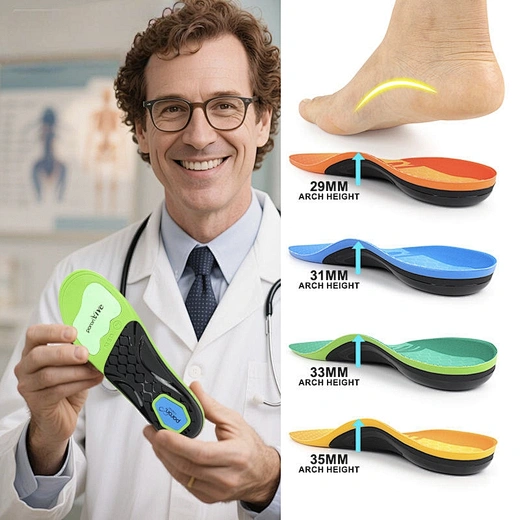
Find relief with low arch support insoles designed specifically for flat or fallen arches. Our orthotic inserts provide gentle cushioning and stability to reduce foot strain during walking or standing. Ideal for everyday comfort without the bulk.
Leather Shoes vs. Sneakers: Choosing the Right Arch Support for Each
Table of Contents
- 1. Introduction: Footwear Matters for Arch Health
- 2. Understanding Arch Types and Support Needs
- 3. Leather Shoes: Characteristics and Arch Demands
- 4. Sneakers: Cushioning vs. Structure
- 5. The Critical Role of Shoe Insoles in Both Categories
- 6. How to Choose Arch Support for Leather Shoes & Sneakers
- 7. Expert Insights: Podiatrist’s Perspective
- 8. Common Mistakes to Avoid
- 9. Industry FAQ – Arch Support & Insoles
- 10. Conclusion: Step Confidently with the Right Support
1. Introduction: Footwear Matters for Arch Health
Whether you dress up for the office in classic leather shoes or prefer the casual comfort of sneakers, your feet endure hours of pressure each day. One of the most overlooked yet vital factors in foot wellness is arch support. The arch of your foot acts as a natural shock absorber, and without proper support, you risk pain, fatigue, and long-term conditions like plantar fasciitis. This comprehensive guide compares leather shoes and sneakers through the lens of arch support, and explains how the right shoe insoles can transform any footwear into a foot-healthy choice.
2. Understanding Arch Types and Support Needs
Before diving into shoe types, it’s essential to know your arch. Feet generally fall into three categories:
- Flat feet (low arches): Require motion control and stability insoles to prevent overpronation.
- Neutral arches: Benefit from moderate support and cushioning.
- High arches: Need extra cushioning to absorb shock and relieve pressure on the heel and ball.
Your arch type dictates the kind of support you need—whether you're wearing leather oxfords or running sneakers. This is where high-quality shoe insoles become indispensable, as they customize the internal environment of any shoe.
3. Leather Shoes: Characteristics and Arch Demands
Leather shoes—think dress shoes, loafers, brogues, and boots—are often prized for their aesthetics, durability, and formal appeal. However, from a biomechanical perspective, they present unique challenges:
3.1 Built-in Support in Leather Shoes
Most traditional leather shoes come with a thin, non-removable insole and minimal arch contour. The rigid sole and narrow toe box can restrict natural foot motion, often leading to strain on the arch, especially during long hours of standing or walking.
3.2 Why Leather Shoes Often Need Supplemental Insoles
Because leather shoes are typically designed for style over ergonomics, they rarely provide adequate arch support. Adding a slim, low-profile shoe insole designed specifically for dress shoes can work wonders. Look for semi-rigid arch support insoles that fit snugly without lifting your foot too high, ensuring comfort without compromising the shoe’s fit.
3.2.1 Best Insole Types for Leather Shoes
Opt for leather-covered insoles or thin orthotic inserts that combine breathability with targeted arch support. These insoles prevent your foot from sliding forward and reduce metatarsal pressure.
4. Sneakers: Cushioning vs. Structure
Sneakers (athletic shoes, trainers, casual lace-ups) are engineered for movement and impact absorption. But not all sneakers are created equal in terms of arch support.
4.1 Built-in Arch Support in Sneakers
Many running and walking sneakers come with removable, cushioned insoles that offer mild to moderate arch support. However, this “one-size-fits-all” approach often falls short for people with specific arch needs. The soft foam may collapse over time, leaving the arch under-supported.
4.2 Matching Sneakers with Arch Type
For high-impact activities like running, you need dynamic arch support that adapts to movement. Sneakers allow more room for aftermarket insoles, so you can replace the factory insole with a performance-oriented shoe insole that offers deep heel cups and variable arch heights.
4.2.1 When to Upgrade Sneaker Insoles
If your sneakers feel comfortable but your arches ache after a walk, it’s time to upgrade. Look for gel-infused or foam insoles with structured arch support that match your foot’s contour.
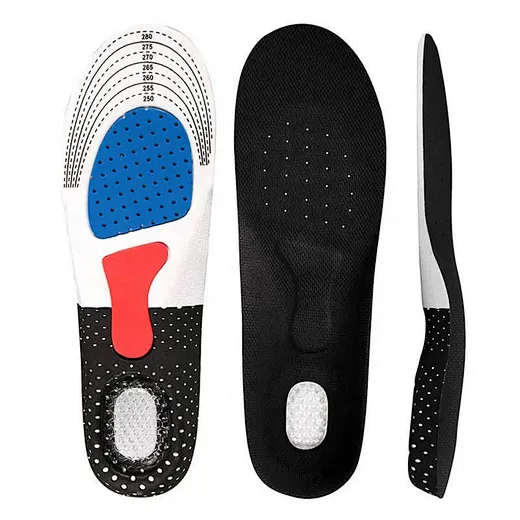
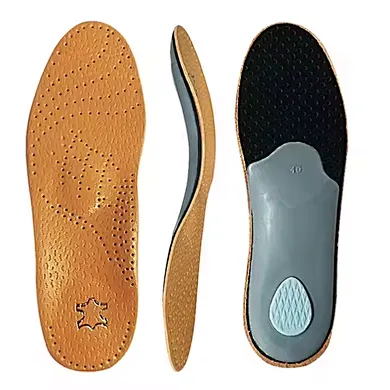
When it comes to enhancing comfort and foot health, choosing the right insole can make all the difference. Here are two premium arch support insoles, each crafted with distinct materials to suit different needs.
The first model features a layered construction of PU leather, TPU, and natural latex. This combination offers a perfect balance of flexibility and support. The latex core provides responsive cushioning that adapts to the contours of your foot, ensuring all-day comfort. Meanwhile, the TPU arch insert delivers firm structural support to help stabilize your foot and reduce strain. The PU leather top layer not only offers a sleek finish but is also embedded with breathable micro-holes, promoting airflow to keep your feet cool and dry even during extended wear.
The second option is engineered for those who prioritize impact absorption. It combines a PU leather surface with a TPU support frame and a layer of Poron foam. Poron is a high-performance urethane foam known for its exceptional ability to dissipate shock and return to its original shape. This makes these insoles ideal for high-impact activities like running or standing on hard surfaces for long hours. The TPU component ensures the arch maintains its rigidity under pressure, while the Poron layer works tirelessly to reduce joint stress by cushioning every step.
Whether you need breathable daily support or high-rebound shock protection, these two insoles offer specialized solutions to keep your feet happy and healthy.


5. The Critical Role of Shoe Insoles in Both Categories
Whether you're wearing leather shoes or sneakers, shoe insoles serve as the bridge between your foot and the footwear. Here’s how they help:
- Pressure distribution: Insoles spread the load across the entire foot, reducing localized arch strain.
- Alignment correction: Proper insoles guide the foot into a neutral position, easing stress on knees and hips.
- Shock absorption: Especially vital in leather shoes with hard soles, insoles cushion every step.
- Customization: Insoles let you personalize the level of arch support, from low to high, regardless of the shoe’s original design.
Experts agree that a quality shoe insole can turn an ill-fitting shoe into a supportive foundation. They are the simplest intervention for long-term foot health.
6. How to Choose Arch Support for Leather Shoes & Sneakers
Selecting the right support involves evaluating both the shoe and your daily activity. Follow this practical guide:
6.1 For Leather Shoes (Formal/Dress)
- Prioritize thin, rigid arch supports that don’t crowd the toe box.
- Choose low-profile insoles (2–3mm thickness) to maintain fit.
- If you stand all day, look for insoles with extra heel cushioning and metatarsal pads.
6.2 For Sneakers (Casual/Athletic)
- Select full-length insoles with pronounced arch contours for active use.
- Consider sport-specific insoles (running, walking, cross-training) that match your gait.
- Replace factory insoles with ones offering dual-layer comfort (firm base + soft top).
6.2.1 Combination Approach
Some people own both leather shoes and sneakers. It’s wise to invest in two pairs of shoe insoles—one designed for dress shoes and one for athletic shoes—so each provides optimal support for its environment.
7. Expert Insights: Podiatrist’s Perspective
“Many patients come to me with arch pain and blame their shoes. But often the real culprit is the lack of customized support inside the shoe. Leather shoes traditionally have minimal arch contour, while sneakers may have generic foam that breaks down quickly. I always recommend high-quality shoe insoles tailored to the shoe type and the individual’s arch. For leather shoes, a slim but firm insole maintains alignment; for sneakers, a more cushioned but supportive insole handles impact. The combination of proper footwear and the right insole is unbeatable.”
— Dr. Elena Martinez, DPM, American Podiatric Medical Association
8. Common Mistakes to Avoid
- Using the same insole in all shoes: A thick running insole in a tight leather shoe will cause discomfort and foot compression.
- Ignoring arch height: Wearing low-support insoles when you have high arches can exacerbate pain.
- Waiting too long to replace insoles: Insoles lose their structure after 6–12 months of regular use.
- Assuming sneakers always provide enough support: Many stylish sneakers have flat, flimsy insoles that offer zero arch contour.
9. Industry FAQ – Arch Support & Insoles
Q1: Can I put a thick insole in my leather dress shoes?
It depends on the shoe depth. Many leather shoes have limited volume. Look for thin-profile insoles (often labeled “dress insole”) that provide support without raising your foot too much. Test the fit before committing.
Q2: How do I know if I need arch support in my sneakers?
If you experience arch fatigue, heel pain, or notice your sneakers wearing out unevenly, you likely need additional support. A simple wet test (looking at your footprint) can reveal your arch type, guiding your insole choice.
Q3: Are expensive insoles worth it for sneakers?
Quality insoles with proper arch engineering and durable materials often outperform budget options. They can prevent injuries and improve comfort, making them a worthy investment, especially if you’re active.
Q4: Can I use the same insoles for leather boots and sneakers?
It’s not ideal. Boots and sneakers have different internal shapes and flex patterns. Using a dedicated insole for each ensures the arch support aligns correctly with the shoe’s structure.
Q5: Do I need to break in new shoe insoles?
Yes, most insoles require a short adaptation period (a few days) as your foot adjusts to the new support. Start by wearing them for a few hours and gradually increase.
10. Conclusion: Step Confidently with the Right Support
Both leather shoes and sneakers have their place in a modern wardrobe, but neither guarantees perfect arch support out of the box. By understanding your arch type and investing in purpose-specific shoe insoles, you can enjoy the style of leather footwear and the comfort of sneakers without compromising foot health. Remember: your feet carry you through life—give them the foundation they deserve. Whether you're at a business meeting or a weekend stroll, the right insole makes all the difference.


From Heel to Toe: How Full-Length Orthotics Support Your Entire Foot
High Heels without Pain: A Guide to Women’s Orthotic Insoles