Comfort with Bunions? How Corrective Insoles Can Help
Find relief with specialized inserts for bunions designed to alleviate pain and improve alignment. These inserts reduce pressure on the big toe joint, provide arch support,and promote proper foot positioning for all-day comfort during walking or standing.
Comfort with Bunions? How Corrective Insoles Can Help
Table of Contents
- Understanding Bunions: More Than Just a Bump
- The Role of Corrective Insoles in Bunion Management
- Key Features of Effective Corrective Insoles
- How Corrective Insoles Alleviate Bunion Discomfort
- Choosing the Right Insoles for Your Bunions
- Expert Insights: Podiatrists Weigh In
- Practical Tips: Integrating Insoles into Daily Life
- Frequently Asked Questions (FAQ)
- Conclusion: Taking the First Step Toward Comfort
Understanding Bunions: More Than Just a Bump
A bunion (hallux valgus) is a complex foot deformity characterized by a bony protrusion at the base of the big toe. This condition develops gradually when the joint at the base of the big toe becomes misaligned, forcing the toe to angle inward toward the others. The resulting bump can become red, swollen, and extremely painful, especially when confined in regular footwear.
Common causes include genetic predisposition, ill-fitting shoes (particularly narrow or high-heeled options), and certain foot types or arthritis. The pain stems not only from the pressure on the bony prominence but also from the altered mechanics of the entire foot. This is where targeted interventions like corrective insoles become a crucial part of non-surgical management.
The Role of Corrective Insoles in Bunion Management
Corrective insoles, also known as orthotic insoles or shoe inserts, are medical-grade devices designed to be placed inside footwear. Their primary function is to correct abnormal foot biomechanics, redistribute pressure, and provide support. For bunion sufferers, they are not merely cushions; they are active therapeutic tools.
Unlike generic insoles, corrective versions are engineered to address the root cause of bunion progression—faulty foot alignment and pressure distribution. By stabilizing the foot's arch and repositioning the forefoot, they can slow the progression of the deformity and provide significant symptomatic relief. They form a cornerstone of conservative care, often used alongside wider shoes, toe spacers, and physical therapy.
Key Features of Effective Corrective Insoles
Not all insoles are created equal. To be effective for bunions, they must possess specific design elements:
1. Targeted Arch Support
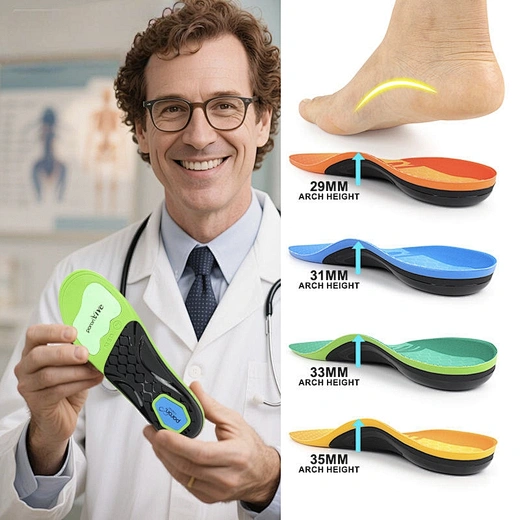
A firm, contoured arch support is non-negotiable. It prevents the arch from collapsing, which in turn reduces the inward rolling of the foot (overpronation) that exacerbates bunion formation.
2. Metatarsal Pad or Dome
A raised pad just behind the ball of the foot is critical. This metatarsal support helps to lift and splay the metatarsal bones, taking pressure off the painful bunion joint and redistributing it more evenly.
3. Deep Heel Cup
A deep, firm heel cup stabilizes the rearfoot, ensuring proper alignment from the ground up and preventing the chain reaction of misalignment that stresses the big toe joint.
4. Correct Toe Alignment Geometry
The insole's shape should encourage a natural toe splay, reducing crowding in the forefoot and gently discouraging the big toe from drifting.
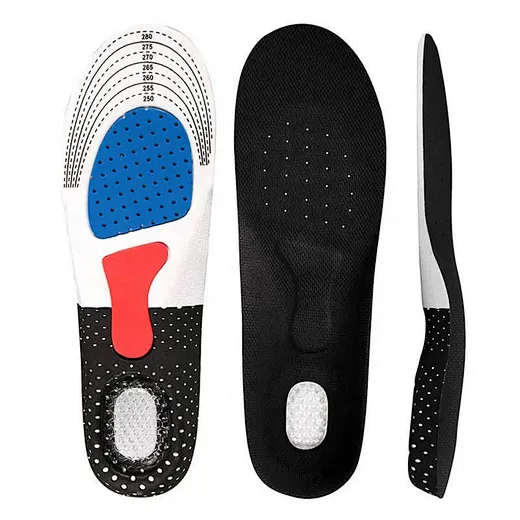
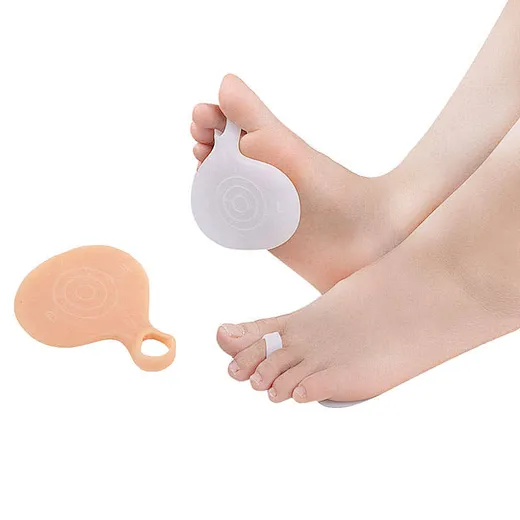
Here are three types of shoe inserts that can help alleviate the discomfort of bunions, each targeting different aspects of foot support and pressure redistribution.
First, consider a supportive insole designed with arch reinforcement and metatarsal support. These insoles help stabilize the entire foot by promoting proper alignment, which in turn reduces excessive stress on the bunion joint. By evenly distributing pressure across the sole, they can lessen pain during walking or standing for extended periods.
Next, a metatarsal pad can be particularly useful if you experience ball-of-foot pain along with bunion discomfort. This small, strategically placed pad lifts and cushions the metatarsal area, preventing the forefoot from taking excessive impact. It also helps to slightly separate the toes, which may reduce friction and pressure on the bunion itself.
Lastly, a deep heel cup insert focuses on rearfoot stability. By cradling the heel in a firm, contoured socket, it minimizes heel movement and controls overpronation—a common factor that exacerbates bunion formation. Improved heel alignment leads to better overall foot posture, thereby reducing strain on the forefoot and bunion area.
Using these inserts, either individually or in combination, can provide meaningful relief and support, making daily activities more comfortable. It’s always a good idea to try them in supportive, wide-fitting shoes for the best results.


How Corrective Insoles Alleviate Bunion Discomfort
The mechanism of relief is multi-faceted and biomechanically sound:
Pressure Redistribution
By incorporating a metatarsal pad, the insole offloads weight from the sensitive bunion area. This immediately reduces pain during standing and walking.
Realignment and Stability
The combination of arch support and a deep heel cup corrects the foot's posture. This reduces the excessive forces that push the big toe joint outward, thereby slowing bunion progression.
Shock Absorption
Quality materials cushion each step, reducing impact-related pain and inflammation in the arthritic joint often associated with bunions.
Primary Benefits Summary:
Immediate Pain Reduction: Through direct pressure relief.
Improved Foot Function: By restoring more natural walking mechanics.
Preventative Action: By addressing the biomechanical causes to hinder worsening.
Enhanced Shoe Fit: Can take up space in shoes that are slightly too wide in other areas due to the bunion.
Choosing the Right Insoles for Your Bunions
Selecting the appropriate insole is vital for success. Here is a practical guide:
Step 1: Determine Your Arch Type
Flat feet (overpronators) often require more rigid support, while high arches may need a different contour. A wet footprint test or podiatrist assessment can help.
Step 2: Look for Specific Design Features
Prioritize insoles that explicitly mention bunion support, metatarsal relief, and structured arch control.
Step 3: Consider Material and Customization
Semi-rigid materials (like thermoplastic) offer the best corrective support. While custom orthotics are ideal, many high-quality over-the-counter options with heat-moldable features provide an excellent compromise.
Step 4: Ensure Proper Fit in Your Shoes
The insole must fit your shoe perfectly. You will likely need to remove the existing liner. Choose shoes with a wide toe box to accommodate both your bunion and the new insole.
Expert Insights: Podiatrists Weigh In
"The goal of bunion management is twofold: alleviate pain and halt progression. Corrective insoles are one of the most effective tools we have for this in conservative care. They work by fundamentally changing the environment in which the foot functions. A well-designed insole with proper metatarsal support doesn't just cushion the bump; it re-trains the foot to bear weight correctly, which can provide lasting relief and potentially delay or avoid the need for surgery."
– Dr. Eleanor Vance, DPM, Board-Certified Podiatrist & Foot Surgeon
Another specialist, Dr. Marcus Lee, adds, "Patients often underestimate the importance of consistency. For corrective insoles to truly slow bunion progression, they must be worn daily in all supportive footwear. It's a long-term strategy, not a sporadic pain reliever."
Practical Tips: Integrating Insoles into Daily Life
To maximize benefits, follow these tips:
Break Them In Gradually: Start by wearing the insoles for 1-2 hours daily, gradually increasing time over a week to allow your feet to adjust.
Pair with Appropriate Footwear: Always use them in shoes with a wide toe box, good depth, and a firm heel counter. Avoid flexible shoes that negate the insole's support.
Combine Therapies: Use your insoles in conjunction with toe stretches, bunion splints at night, and anti-inflammatory measures as recommended by your doctor.
Monitor and Replace: Inspect insoles every 6-12 months. When the arch support collapses or the material compresses, their corrective power diminishes and they should be replaced.
Frequently Asked Questions (FAQ)
Can corrective insoles cure my bunion?
No, they cannot reverse the bony deformity that has already formed. However, they are highly effective at managing bunion pain, improving function, and, most importantly, slowing or stopping further progression. They are a treatment, not a cure.
Are custom orthotics better than over-the-counter (OTC) insoles for bunions?
Custom orthotics, prescribed by a podiatrist, are tailored precisely to your foot's contours and biomechanical needs, making them the gold standard for complex cases. However, many high-quality, biomechanically designed OTC insoles with features like metatarsal support and arch control offer excellent relief and are a great starting point for mild to moderate bunions.
How long will it take to feel relief after using corrective insoles?
Many users experience some immediate pressure relief. For full biomechanical benefits and a significant reduction in daily pain, it typically takes 1-3 weeks of consistent wear as your body adapts to the new alignment.
Can I trim insoles to fit my shoes?
Most OTC insoles are designed to be trimmed. Always follow the manufacturer's trimming guide, usually outlined on the product. Be careful not to cut away critical support features like the arch or metatarsal pad. Never trim custom orthotics without consulting your podiatrist.
Do I need to wear insoles in all my shoes?
For optimal results in slowing bunion progression, yes. Consistency is key. Keep multiple pairs for your most frequently worn shoes (e.g., work shoes, athletic shoes, casual walking shoes). This ensures your feet are always supported.
Conclusion: Taking the First Step Toward Comfort
Living with bunion pain does not have to be your normal. While bunions are a progressive condition, their impact on your comfort and mobility can be profoundly managed with the right tools. Corrective insoles stand out as a scientifically-backed, non-invasive solution that addresses the root biomechanical causes. By providing essential arch support, targeted metatarsal relief, and overall foot realignment, they offer a powerful path to reduced pain and a more active life.
Investing in a quality pair of insoles is an investment in your long-term foot health. Start by consulting a footwear specialist or podiatrist, choose insoles with the features outlined here, and commit to wearing them consistently. The journey to greater comfort begins with the single, supported step you take today.


High Heels without Pain: A Guide to Women’s Orthotic Insoles
Stop Ball-of-Foot Pain: A Comprehensive Guide to Metatarsal Pads and Support Insoles