Stop Back Pain from the Ground Up: The Critical Link Between Foot Support and Spine Health
Experience targeted high arch foot support with our contoured shoe inserts. Designed to alleviate pressure points, improve alignment, and distribute weight evenly for all-day comfort during standing, walking, or running. Discover relief for high arches.
Stop Back Pain from the Ground Up: The Critical Link Between Foot Support and Spine Health
Table of Contents
- Introduction: Your Feet Are the Foundation
- The Kinetic Chain: How Feet Influence the Spine
- Common Foot Problems That Lead to Back Pain
- How Supportive Insoles (Orthotics) Correct Alignment
- Choosing the Right Insoles for Your Needs
- Expert Insights: Medical Perspectives
- Integrating Insoles into Daily Life
- Frequently Asked Questions (FAQ)
- Conclusion: Building a Pain-Free Future
Introduction: Your Feet Are the Foundation
When we think about back pain, we rarely consider our feet. Yet, these complex structures—each containing 26 bones, 33 joints, and over 100 muscles, tendons, and ligaments—are the literal foundation of our entire musculoskeletal system. Poor foot alignment or inadequate support can create a cascade of biomechanical issues that travel upward, ultimately manifesting as pain in the knees, hips, and back. This blog explores the profound connection between foot support and spine health, demonstrating how the right intervention, particularly through the use of supportive shoe insoles, can stop pain from the ground up and restore overall postural harmony.
The Kinetic Chain: How Feet Influence the Spine
The human body operates as an interconnected kinetic chain. A deviation or weakness in one link inevitably affects the others. The feet are the first point of contact with the ground, acting as shock absorbers and stabilizers.
The Pathway of Pain
When feet overpronate (roll inward excessively) or supinate (roll outward), it causes the tibia and femur to rotate abnormally. This rotation tilts the pelvis, often leading to an anterior or posterior pelvic tilt. A misaligned pelvis forces the lumbar spine (lower back) to compensate, creating unnatural curvature, muscle strain, ligament stress, and pressure on spinal discs. This domino effect is known as compensatory misalignment.
Key Biomechanical Events:
- Poor Arch Support: Collapsed arches flatten the foot, lengthening the leg on that side and creating a functional leg length discrepancy, which unlevels the pelvis.
- Inadequate Shock Absorption: Each heel strike sends a force wave equal to 2-3 times your body weight up your skeleton. Without proper cushioning, this repetitive impact jars the spine.
- Altered Gait Patterns: Foot pain changes how you walk, leading to asymmetrical movement patterns that overwork muscles in the back and hips.
Common Foot Problems That Lead to Back Pain
Several specific foot conditions are notorious for contributing to chronic back issues.
Plantar Fasciitis and Back Compensation
The sharp heel pain of plantar fasciitis causes individuals to alter their gait to avoid pain. This limping or shuffling places uneven loads on the spine, often leading to unilateral lower back pain on the side opposite the injured foot.
Flat Feet (Pes Planus)
Flat feet lack a proper medial arch, leading to overpronation. This is one of the most common contributors to a chain of misalignment ending in lower back pain. The constant inward roll of the ankle strains the entire posterior chain of muscles.
High Arches (Pes Cavus)
Conversely, excessively high arches are rigid and poor at shock absorption. The excessive force transmitted upward can lead to stress fractures, knee pain, and a jarred, achy spine.
How Supportive Insoles (Orthotics) Correct Alignment
This is where high-quality shoe insoles become a powerful, non-invasive tool for prevention and relief. They are not mere cushions; they are functional orthotic devices designed to correct alignment.
What Do Therapeutic Insoles Actually Do?
- Provide Biomechanical Correction: They support all three arches of the foot (medial, lateral, transverse) to maintain the foot in a neutral, anatomically correct position.
- Redistribute Pressure: They offload pressure from painful areas (like heels or balls of the feet) and distribute weight evenly across the entire foot surface.
- Improve Shock Absorption: Advanced materials like viscoelastic polymers or gel capsules dissipate impact forces before they travel up the legs.
- Stabilize Heel and Ankle: A deep heel cup prevents excessive rearfoot motion, which is the starting point for pronation/supination.
The Three-Tiered Approach of Insoles
1. Cushioning Insoles
Best for high-impact activities or high arches. They focus on shock attenuation to protect the spine from jarring impacts.
2. Supportive Insoles
Ideal for flat feet or mild overpronation. They offer arch support and medial posting to gently guide the foot into a neutral position.
3. Custom Orthotics
Prescribed by podiatrists for severe, complex biomechanical issues. They provide precise, personalized correction based on a gait analysis and foot impression.
When it comes to maximizing comfort and performance in your footwear, the right insole can make all the difference. We're excited to introduce three specialized options, each designed to address specific needs and elevate your everyday stride.
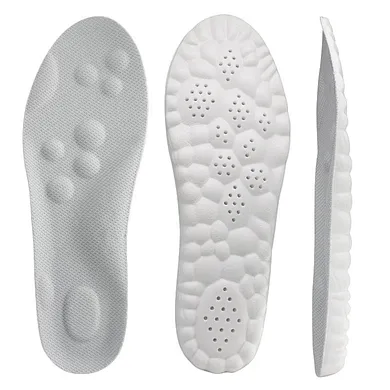
First is our Premium PU Cushioning Insole, crafted from high-density polyurethane. This insole is engineered for superior shock absorption, effectively reducing impact on your joints with every step. It features a gentle arch support that promotes a natural foot alignment without being intrusive. Perfect for daily wear, long walks, or standing for extended periods, it’s the ideal choice for anyone seeking enhanced comfort and reliable, all-day cushioning.
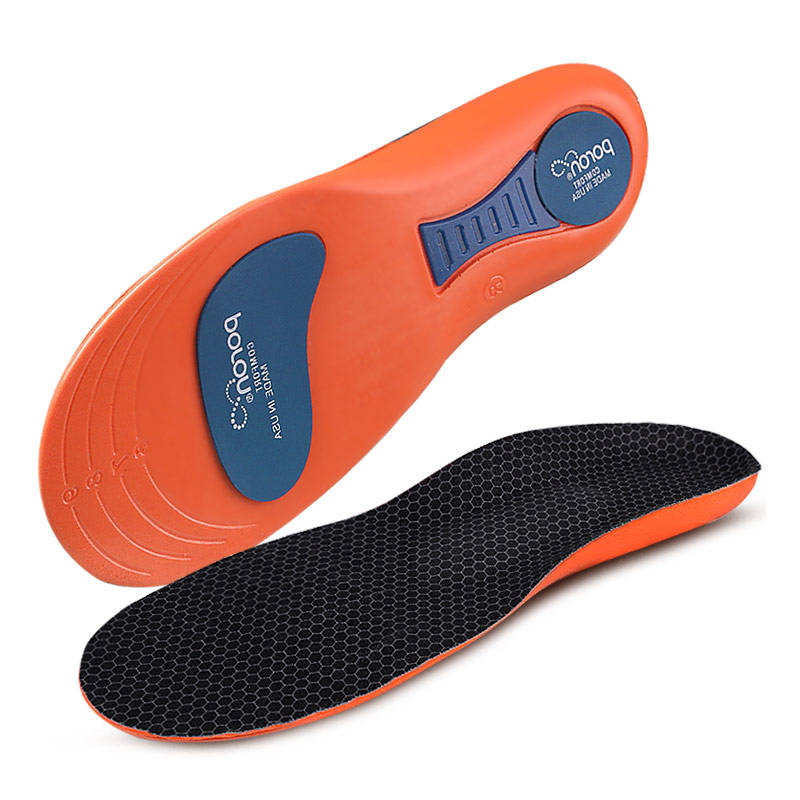
Next, we offer the EVA+TPU Support Insole, a lightweight yet durable solution combining ethylene-vinyl acetate and thermoplastic polyurethane. This innovative design focuses on corrective support—it helps guide your feet into a healthier, more neutral position, which can alleviate strain caused by overpronation or supination. Despite its supportive structure, it remains remarkably lightweight and breathable, making it an excellent fit for athletic shoes, work boots, or any active lifestyle where stability and agility are key.
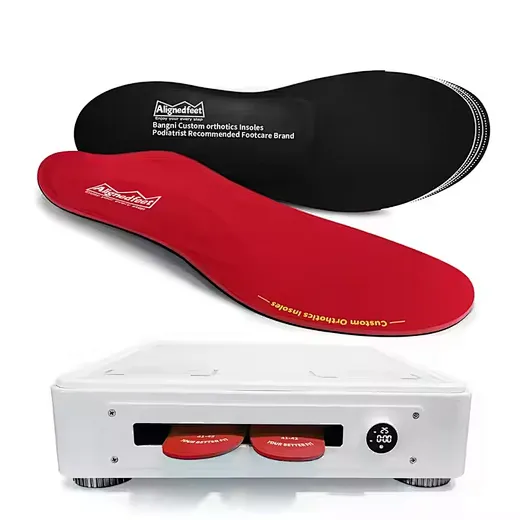
For the ultimate personalized fit, explore our Custom Heat-Moldable Insole. This advanced insole can be easily shaped at home using simple heat (like a standard oven). Once warmed, it becomes pliable, allowing you to mold it precisely to the contours of your unique foot arch. As it cools, it locks into your custom shape, providing tailored arch support that matches your exact anatomy. This is the go-to solution for those with specific arch types, uneven pressure distribution, or anyone seeking a truly customized feel that off-the-shelf products can't match.
Whether you prioritize plush cushioning, corrective stability, or a bespoke fit, one of these insoles is your next step toward unmatched comfort and support.


Choosing the Right Insoles for Your Needs
Selecting the correct insole is crucial for effectiveness.
- For General Back Pain & Overpronation: Look for insoles with firm arch support, a deep heel cup, and a pronation wedge.
- For High-Impact & Shock Absorption: Seek cushioned, full-length insoles made from materials like PORON® or polyurethane foam.
- Consider Your Footwear: Ensure the insole is appropriate for your shoe type (dress, athletic, work boot). Some may require trimming for a perfect fit.
Expert Insights: Medical Perspectives
"In my clinical practice, I see countless patients with chronic low back pain whose root cause is biomechanical, starting at the feet. When we correct foot posture with appropriate orthotic intervention, we often see a dramatic reduction in lumbar strain and pain. It's a classic example of treating the source, not just the symptom. A well-designed insole provides the stable foundation the entire body needs."
– Dr. Angela Roberts, DPM, Board-Certified Podiatrist and Postural Specialist
"The spine is designed to sit atop a level pelvis. If faulty foot mechanics create a tilted pelvis, the spinal muscles are in a constant state of 'guarding' or spasm to maintain balance. This is exhausting and painful. Supportive insoles are a simple yet profoundly effective first-line treatment in a comprehensive spinal care plan."
– Dr. Marcus Chen, DC, Chiropractor and Rehabilitation Expert
Integrating Insoles into Daily Life
For optimal results, consistency is key.
- Break Them In Gradually: Start by wearing your new insoles for 2-3 hours a day, increasing duration over a week to allow your body to adapt to the new alignment.
- Use Them in All Supportive Shoes: For comprehensive correction, use your insoles in athletic shoes, work boots, and everyday casual shoes.
- Pair with Strengthening Exercises: Combine insole use with exercises for the feet (e.g., toe curls, arch lifts) and core to build a stable musculoskeletal system from the ground up.
- Monitor and Replace: Insoles lose their supportive properties over time (typically every 6-12 months for regular use). Replace them when they show signs of wear or compression.
Frequently Asked Questions (FAQ)
1. Can insoles really cure my back pain?
While "cure" depends on the specific cause, insoles are a highly effective treatment for biomechanically-induced back pain. By correcting the alignment starting at your feet, they remove a major source of strain, allowing inflammation to subside and muscles to function properly. They are often a critical component of a multidisciplinary treatment plan.
2. What's the difference between over-the-counter insoles and custom orthotics?
Over-the-counter insoles are pre-fabricated and offer excellent support for common issues and general prevention. Custom orthotics are medical devices cast or scanned from a mold of your foot and are prescribed for specific, complex biomechanical pathologies. A podiatrist can guide you on which is appropriate.
3. How long will it take to feel a difference in my back after using insoles?
Many people notice improved foot and leg comfort within days. Changes in back pain may take 2 to 6 weeks as your posture and muscle patterns gradually adjust. Consistency is crucial.
4. Are there any side effects to using supportive insoles?
As your body adapts to proper alignment, you might experience temporary soreness in your feet, calves, or even back—similar to the soreness from starting a new exercise. This usually subsides within a week. If pain is sharp or increases, consult a professional to ensure proper fit.
5. Can I use the same insoles in all my shoes?
It depends on the insole design and volume of your shoes. Many 3/4 length insoles are versatile. However, you may need specific insoles for low-profile dress shoes versus athletic shoes. Always check the product specifications.
Conclusion: Building a Pain-Free Future from the Ground Up
Addressing back pain requires a holistic view of the body's interconnected system. Ignoring foot health is like building a house on an unstable foundation—eventually, the structure above will suffer. Supportive shoe insoles represent a proactive, accessible, and scientifically-backed strategy to break the cycle of compensatory misalignment. By investing in proper foot support, you are not just caring for your feet; you are providing a stable, balanced base for your knees, hips, and ultimately, your spine. Start from the ground up, and take a decisive step toward lasting spine health and overall well-being.
Take Action Today: Consider a gait analysis, evaluate your footwear, and explore how the right insole can become the cornerstone of your pain management and prevention strategy.


Shoe Insoles Replacement: When and Why It Matters for Foot Health