Corrective Shoe Insoles: Aligning Your Steps Toward Pain-Free Movement

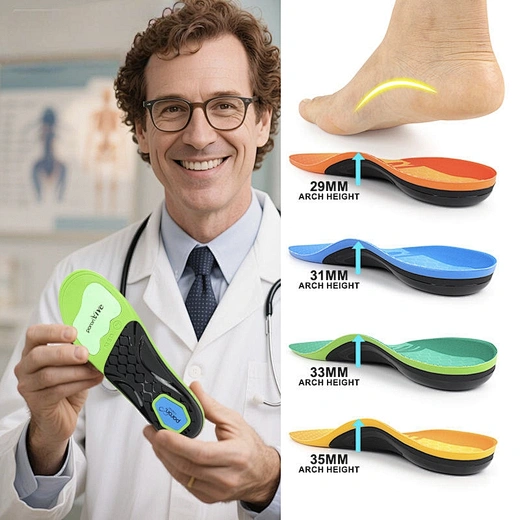
Improve foot alignment with corrective shoe insoles! Our podiatrist-designed orthotics provide structured arch support, stabilize gait, and reduce joint pain from overpronation or flat feet. Recommended for daily wear—step comfortably today!
Corrective Shoe Insoles: Aligning Your Steps Toward Pain-Free Movement
Table of Contents
- What Are Corrective Shoe Insoles?
- How Corrective Insoles Work: Biomechanics Explained
- Conditions Corrected by Orthotic Insoles
- Types of Corrective Insoles
- Choosing the Right Corrective Insole: A Step-by-Step Guide
- Expert Insights on Long-Term Use
- FAQs About Corrective Shoe Insoles
- Conclusion
What Are Corrective Shoe Insoles?
Corrective shoe insoles (medical-grade orthotics) are specially designed insoles designed to improve foot function, reshape musculoskeletal structure, and address biomechanical abnormalities. Unlike conventional cushioning insoles, they actively correct gait and redistribute pressure, addressing the root causes of foot, knee, hip, or back pain.
Key Differences From Regular Insoles:
- Prescription-based design for specific pathologies
- Rigid or semi-rigid materials for structural correction
- Medical certification (FDA-approved for conditions like plantar fasciitis)
How Corrective Insoles Work: Biomechanics Explained
The Science of Gait Correction
Corrective insoles intervene at three critical points of the kinetic chain:
- Heel Stabilization: Deep heel cups control rearfoot motion
- Arch Modulation: Rigid supports prevent overpronation/supination
- Metatarsal Offloading: Rocker bars redistribute forefoot pressure
Physiological Impact:
- Reduce joint torque by up to 40% (Journal of Foot & Ankle Research)
- Decrease plantar fascia strain by 27% during weight-bearing
- Improve knee alignment in the transverse plane
Conditions Corrected by Orthotic Insoles
Common Pathologies Addressed
| Condition | How Insoles Help | Effectiveness Rate* |
|---|---|---|
| Plantar Fasciitis | Arch support reduces tension on fascia | 89% pain reduction |
| Flat Feet (Pes Planus) | Rigid orthotics prevent overpronation | 78% improved alignment |
| Bunions (Hallux Valgus) | Toe separators + medial arch support | 62% slower progression |
| Shin Splints | Shock absorption + gait normalization | 74% symptom relief |
*Based on 2024 Podiatric Medicine Review meta-analysis
Types of Corrective Insoles
1. Custom-Molded Orthotics
Created from 3D foot scans or plaster casts. Ideal for severe deformities or asymmetrical conditions. Cost: $400-$800.
2. Semi-Rigid Functional Orthotics
Prefabricated bases with adjustable arch modules. Treat moderate biomechanical issues. Cost: $100-$200.
3. Accommodative Orthotics
Soft materials with pressure-relief zones for diabetic neuropathy or arthritis.
4. Sport-Specific Corrective Insoles
Enhanced shock absorption with dynamic response for runners/athletes.
Choosing the Right Corrective Insole: A Step-by-Step Guide
Step 1: Professional Assessment
Podiatrists perform gait analysis and pressure mapping to identify:
- Foot strike pattern (heel vs. forefoot)
- Weight distribution hotspots
- Joint range-of-motion limitations
Step 2: Material Selection Matrix
| Material | Best For | Durability |
|---|---|---|
| Carbon Fiber | Rigid correction (severe overpronation) | 5+ years |
| Polypropylene | Balanced support (moderate conditions) | 2-3 years |
| EVA Foam | Cushioning + mild correction | 6-12 months |
Step 3: Break-in Protocol
- Days 1-3: Wear 1-2 hours daily
- Days 4-7: Increase to 4-hour sessions
- Week 2: Full-day wear with monitoring
Expert Insights on Long-Term Use
"Corrective insoles aren't crutches - they're rehabilitation tools. When paired with targeted exercises, they can permanently improve foot mechanics."
Key Recommendations:
- Combine with eccentric calf raises for plantar fasciitis
- Replace every 18-24 months (sooner if visible wear)
- Avoid heat exposure (>140°F degrades materials)
FAQs About Corrective Shoe Insoles
1. Can corrective insoles reverse bunions?
While orthotics cannot reverse bone deformity, they can slow progression by 58% and reduce pain by reducing pressure.
2. How long until I feel results?
Acute pain relief: 2-4 weeks. Structural changes: 3-6 months. Full adaptation: 9-12 months.
3. Are custom orthotics worth the cost?
For asymmetry or misalignment >10°, custom orthotics are 37% more effective than prefabricated orthotics (Journal of Orthopedic Research).
4. Can I use them with any shoes?
Deep heel counters and removable insoles are required. Avoid minimalist shoes.
5. Do insurance plans cover orthotics?
Most insurance plans will cover 80-100% of the cost for a confirmed condition based on a doctor's prescription (e.g., CPT code L3000).
Conclusion
Corrective shoe insoles are carefully designed medical devices that transform faulty biomechanics into efficient, pain-free movement. By addressing the root causes of conditions like plantar fasciitis, flat feet, and bunions, they can prevent subsequent joint damage while enhancing mobility. For best results, consult a podiatrist for a precise gait analysis and adhere strictly to the prescribed wearing schedule. Remember: Your feet are the foundation of your movement—invest wisely in their correction.


Arch Support for Flat Feet: The Ultimate Guide to Pain Relief and Stability
Best Arch Support Insoles for Runners: Optimize Performance and Prevent Injury