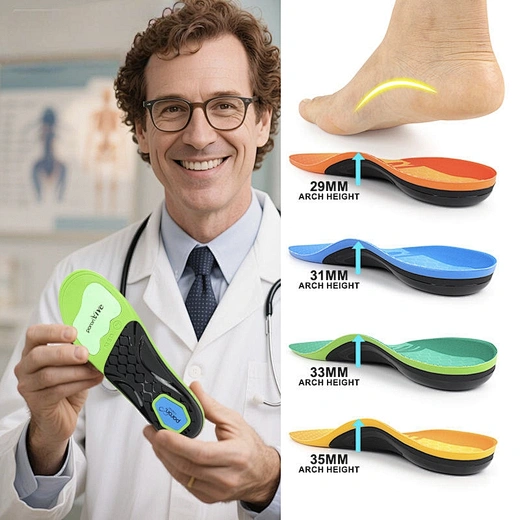
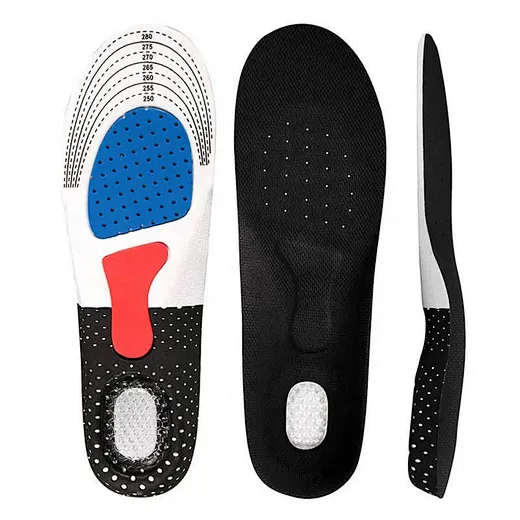
Corrective Insoles: Your Guide to Pain-Free Movement and Proper Alignment

Fix foot alignment with premium corrective insoles! Our podiatrist-designed orthotics stabilize arches, improve posture & reduce joint pain. Ideal for overpronation, flat feet & plantar fasciitis.
Corrective Insoles: Your Guide to Pain-Free Movement and Proper Alignment
Table of Contents
- What Are Corrective Insoles?
- How Corrective Insoles Work
- Conditions Corrective Insoles Address
- How to Choose the Right Corrective Insole
- Expert View on Corrective Insoles
- FAQs About Corrective Insoles
- Conclusion
What Are Corrective Insoles?
Corrective insoles (also known as orthotic insoles) are specialized shoe inserts designed to address biomechanical imbalances in the feet. Unlike standard cushioned insoles, they actively reshape foot positioning by:
- Realigning joints during movement
- Redistribute pressure on the foot
- Improving overall body posture
- Realign joints during movement
Prescribed by podiatrists or available over-the-counter, they're medical-grade solutions for chronic foot issues.
How Corrective Insoles Work
Biomechanical Correction Mechanism
Corrective insoles use three key elements to restore natural foot function:
1. Structured Arch Support
A rigid or semi-rigid arch prevents excessive inward/outward rolling (overpronation/supination) by supporting the plantar fascia ligament.
2. Deep Heel Cup
Stabilizes the calcaneus (heel bone) to maintain neutral alignment and absorb shock.
3. Metatarsal Pads
Lifts and separates the ball of the foot to relieve pressure on nerves and joints.
Long-Term Benefits
- Reduces joint degeneration in knees and hips
- Prevents progressive deformities like bunions
- Improves gait efficiency for athletes
Conditions Corrective Insoles Address
1. Flat Feet (Pes Planus)
Rigid arch supports counteract overpronation by preventing arch collapse during weight-bearing.
2. Plantar Fasciitis
Reduces tension on the plantar fascia ligament through targeted arch elevation.
3. Metatarsalgia
Metatarsal pads redistribute pressure away from the ball of the foot.
4. Posterior Tibial Tendon Dysfunction
Supports the medial arch to reduce strain on weakened tendons.
How to Choose the Right Corrective Insole
Step 1: Identify Your Foot Type
Perform a wet foot test:
- Flat feet: Full footprint visible
- High arches: Narrow band connecting heel and forefoot
- Neutral: Moderate curve along the arch
Step 2: Match to Your Condition
| Condition | Required Insole Feature |
|---|---|
| Overpronation | Firm medial arch support |
| Supination | Lateral wedge support |
| Heel Spurs | Deep heel cup with gel cushioning |
Step 3: Consider Material
- Plastic/Polypropylene: Maximum correction for severe cases
- EVA Foam: Balanced support for moderate needs
- Heat-Moldable: Customizable fit for unique foot shapes
Expert View on Corrective Insoles
Dr. Michael Reynolds, DPM, explains: "Corrective insoles aren't just comfort devices - they're medical interventions. For patients with biomechanical disorders, they can delay or prevent surgery by 60-70% when used early."
He recommends:
- Start with OTC insoles for mild symptoms
- Seek custom orthotics if pain persists after 4 weeks
- Combine with physical therapy for neuromuscular retraining
FAQs About Corrective Insoles
1. How long before I see results?
Initial relief in 1-2 weeks; full biomechanical changes take 3-6 months of consistent use.
2. Are custom orthotics better than OTC corrective insoles?
Custom options are superior for complex conditions or significant leg length discrepancies. Many OTC options work well for moderate issues.
3. Can children use corrective insoles?
Yes - especially for pediatric flatfoot or gait abnormalities. Early intervention prevents adult complications.
4. Do I need a prescription?
Only for custom medical-grade orthotics. Most OTC corrective insoles are available without prescription.
Conclusion


Orthopedic Arch Support Insoles: Revolutionizing Foot Comfort and Health
Arch Support Insoles for Shoes: Unlock Comfort and Prevent Pain