Can Flat Feet Be Corrected? Understanding Treatment Options and the Role of Insoles
Wondering can flat feet be corrected? While structural flat feet may not fully reverse, proper arch supports and exercises can significantly improve symptoms, alignment, and function. Many experience pain relief and better mobility with orthotic interventions.
Can Flat Feet Be Corrected? Understanding Treatment Options and the Role of Insoles
Table of Contents
- Understanding Flat Feet
- Can Flat Feet Be Corrected?
- The Role of Insoles in Managing Flat Feet
- Other Treatment Options
- Expert Insights on Flat Feet Correction
- Frequently Asked Questions
- Conclusion
Understanding Flat Feet
Flat feet, medically known as pes planus, is a condition where the arches of the feet collapse, causing the entire sole to make contact with the ground. This common condition can be present from childhood (congenital) or develop later in life due to factors like aging, injury, or medical conditions such as rheumatoid arthritis.
There are two main types of flat feet:
- Flexible flat feet: Arches disappear when standing but reappear when not bearing weight
- Rigid flat feet: Arches are absent regardless of weight-bearing status
Can Flat Feet Be Corrected?
The question of whether flat feet can be "corrected" depends on several factors, including the type of flat feet, the patient's age, and the underlying cause. While complete anatomical correction of adult-acquired flat feet is often not possible without surgery, significant functional improvement can be achieved through conservative treatments.
Treatment Goals for Flat Feet
- Reduce or eliminate pain and discomfort
- Improve foot function and alignment
- Prevent further deterioration
- Enhance mobility and quality of life
The Role of Insoles in Managing Flat Feet
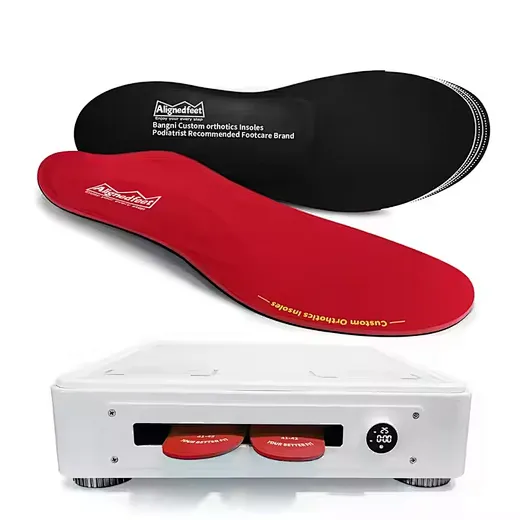
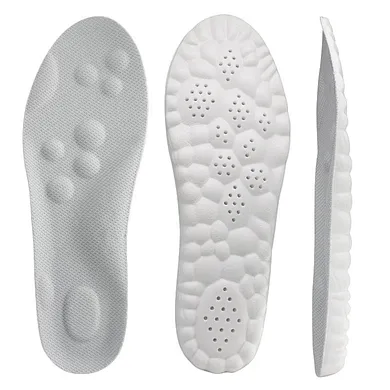
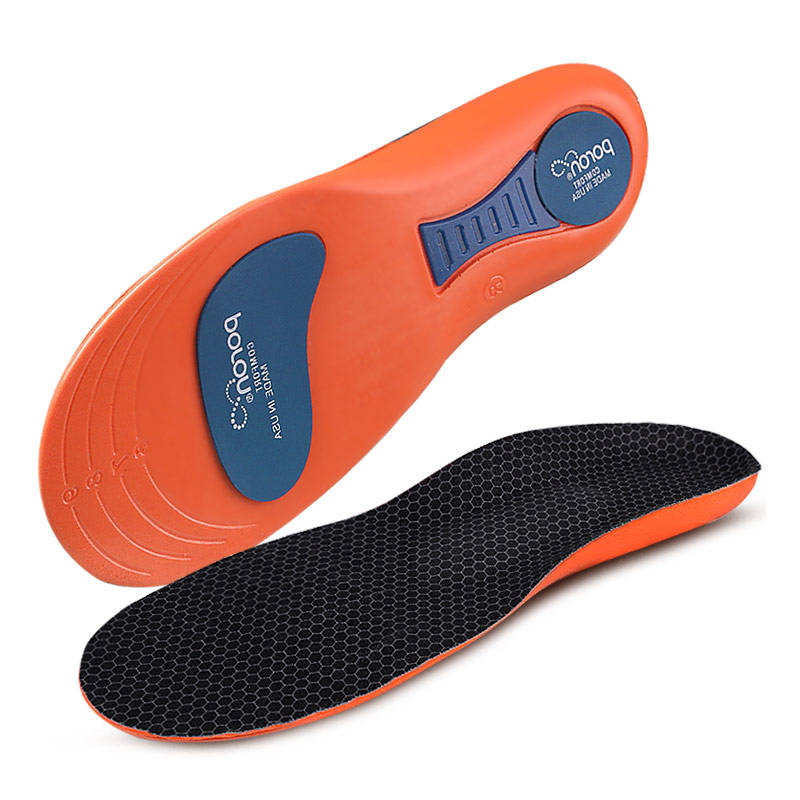
Orthotic insoles play a crucial role in managing flat feet by providing the support that the natural arch cannot. These devices are designed to redistribute pressure, improve alignment, and reduce strain on the feet, ankles, knees, and hips.
How Insoles Help with Flat Feet
1. Arch Support
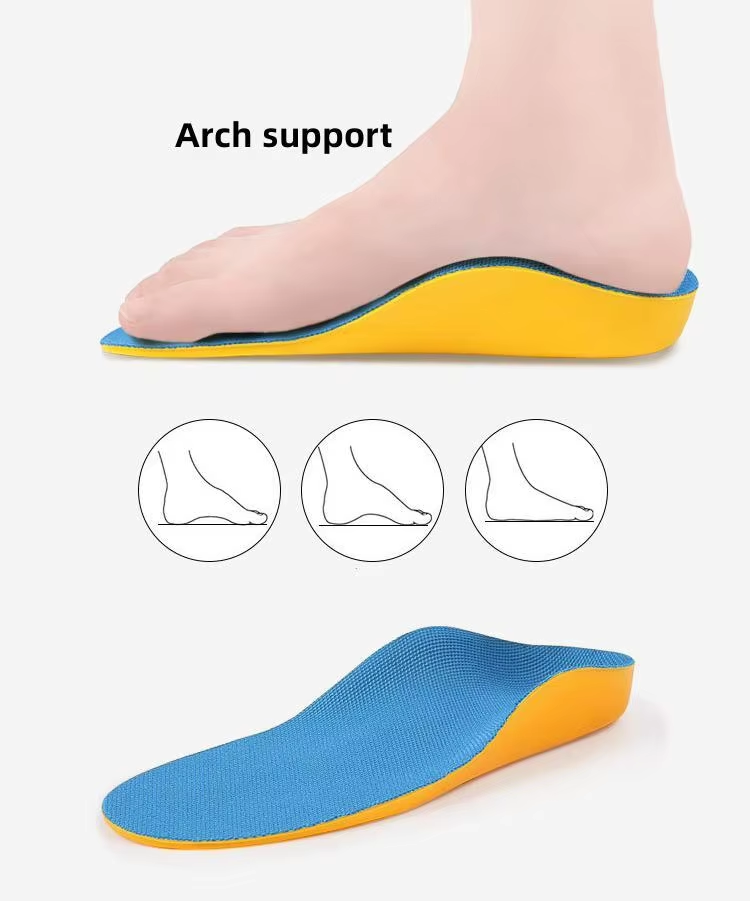
Insoles with contoured arch support help maintain proper foot positioning, reducing stress on ligaments and tendons that would otherwise overstretch.
2. Motion Control
By limiting excessive inward rolling of the foot (overpronation), specialized insoles help stabilize the gait and prevent related issues in the kinetic chain.
3. Shock Absorption
Cushioned insoles with shock-absorbing materials reduce impact forces during walking or running, decreasing discomfort.
4. Pressure Redistribution
Well-designed insoles evenly distribute weight across the foot, preventing excessive pressure on specific areas that can lead to pain or injury.
Types of Insoles for Flat Feet
- Over-the-counter arch supports: Prefabricated inserts providing basic support
- Semi-rigid orthotics: Offer more substantial support with some flexibility
- Rigid functional orthotics: Designed to control motion and correct alignment
- Custom-molded orthotics: Precisely crafted to an individual's foot shape
Other Treatment Options
While insoles are a cornerstone of flat feet management, they work best as part of a comprehensive treatment approach:
Physical Therapy
Targeted exercises can strengthen supporting muscles and improve flexibility, enhancing the effectiveness of orthotic support.
Supportive Footwear
Shoes with firm heel counters, adequate arch support, and stable soles complement the benefits of insoles.
Surgical Options
For severe cases that don't respond to conservative treatments, surgical procedures such as osteotomies, arthrodesis, or tendon transfers may be considered to reconstruct the arch.
Expert Insights on Flat Feet Correction
Dr. Emily Robertson, a board-certified podiatrist with over 15 years of experience, shares her perspective:
"While we can't always 'cure' flat feet in the traditional sense, we can absolutely manage them effectively. The key is understanding that flat feet exist on a spectrum, and treatment must be tailored to the individual. Orthotic insoles are often our first line of defense—they provide the external support that the foot's internal structures can't maintain on their own. When combined with appropriate strengthening exercises and proper footwear, most patients experience significant improvement in symptoms and function."
Dr. Robertson emphasizes that early intervention, especially in children with symptomatic flat feet, can sometimes lead to improved arch development before skeletal maturity.
Frequently Asked Questions
1. Can adults with flat feet develop arches?
While adults typically cannot develop new anatomical arches without surgical intervention, they can achieve functional improvement through supportive measures like orthotic insoles and exercises that create the appearance of better arch definition.
2. How long does it take for insoles to help with flat feet?
Most people notice some improvement within a few weeks, but it can take 2-3 months of consistent wear to experience the full benefits as your body adjusts to the improved alignment.
3. Are custom orthotics better than over-the-counter insoles for flat feet?
Custom orthotics provide personalized support based on a detailed assessment of your foot structure and gait pattern. While they're typically more effective for complex cases, many people with mild to moderate flat feet find sufficient relief with high-quality over-the-counter options.
4. Can exercises alone fix flat feet?
While exercises can strengthen supporting muscles and improve symptoms, they typically cannot create an anatomical arch where one doesn't exist. Exercises are most effective when combined with orthotic support.
5. At what age should flat feet be treated in children?
Most children outgrow flexible flat feet without intervention. Treatment is typically considered only if the condition causes pain, affects function, or persists beyond age 8-10 with associated symptoms.
Conclusion
While complete anatomical correction of flatfeet isn't always possible, especially in adults, significant functional improvement can be achieved through comprehensive treatment. Orthotics play a crucial role in this process, providing necessary support, improving arch alignment, and alleviating discomfort. Combined with appropriate footwear, targeted exercises, and professional guidance, most people with flatfeet can enjoy an active, pain-free life.
The key to successfully managing flatfeet lies in understanding that there are many different types of flatfeet, each requiring a personalized treatment strategy. If you are experiencing foot pain or dysfunction related to flatfeet, consult a podiatrist or orthopedic specialist, who can recommend the most appropriate combination of interventions for your specific situation.


Fallen Arches vs. Plantar Fasciitis: Understanding the Difference and Finding Relief
How to Correct Flat Feet: Effective Strategies for Arch Support and Pain Relief