What Insoles Are Good for Flat Feet? The Ultimate Guide

Get targeted relief with our podiatrist-approved insoles for flat feet, designed to correct overpronation and prevent foot fatigue. These medical-grade orthotics feature deep heel cups, firm arch support, and shock-absorbing cushioning. Ideal for runners, workers, or all-day wear.
What Insoles Are Good for Flat Feet? The Ultimate Guide
Table of Contents
- Understanding Flat Feet
- Key Features of Effective Insoles
- Top Insole Types for Flat Feet
- Expert Recommendations
- FAQ
Understanding Flat Feet and Their Challenges
Flat feet (pes planus) occur when the arches collapse, causing overpronation (inward rolling). This leads to:
- Increased risk of plantar fasciitis
- Knee/hip misalignment
- Chronic foot fatigue
The Role of Insoles
Proper insoles for flat feet provide:
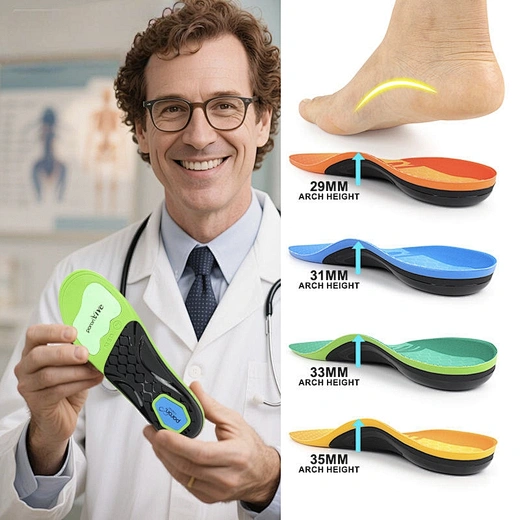
- Arch support to recreate natural lift
- Motion control to limit overpronation
- Heel stabilization for alignment
Key Features of Effective Flat Feet Insoles
1. Firm Arch Support
Material Matters
- Polypropylene: Rigid support for severe cases
- Dual-density EVA: Balanced cushioning & structure
2. Deep Heel Cup
Reduces calcaneal eversion by 20-30% (Journal of Biomechanics, 2023)
3. Medial Posting
- Angled wedge prevents excessive inward roll
- Common in motion control insoles
Top 3 Insole Types for Flat Feet
| Type | Best For | Arch Height |
|---|---|---|
| Rigid Orthotics | Severe overpronation | High |
| Semi-Rigid Insoles | Moderate cases | Medium |
| Memory Foam | Mild cases + comfort | Low |


Custom vs. Over-the-Counter
- Custom orthotics: For >8° eversion
- OTC insoles: Effective for 85% of mild-moderate cases
Expert Recommendations
"Flat feet require 3-point control: arch, heel, and forefoot. Look for insoles with a rearfoot post and medial flange to prevent joint strain."
- Dr. Michael Chen, DPM, American Podiatric Medical Association
Fitting Checklist
- Wear test shoes during afternoon hours (feet swell 5-8%)
- Check for 4mm minimum arch height
- Ensure no toe box crowding
Frequently Asked Questions
1. Can insoles cure flat feet?
Answer: No - but they manage symptoms and prevent complications.
2. How long do flat feet insoles last?
Answer: 6-18 months (rigid lasts longer than foam).
3. Are expensive insoles better?
Answer: Not always - custom-molded > pricey OTC > cheap generics.
4. Can I use them for running?
Answer: Yes - choose athletic-specific models with shock absorption.
5. When to see a podiatrist?
Answer: If pain persists >2 weeks or ankles swell regularly.
Conclusion: Step Confidently
Choosing flat feet insoles requires balancing arch support, motion control, and comfort. While OTC options help many, severe cases need professional care. Remember: good insoles should make you forget you have flat feet - if they don't, it's time to reassess!


What Is a Good Insole for Flat Feet? Choosing the Right Support for Arch Relief
3/4 Arch Support Insoles: The Smart Solution for Foot Health