Comfort Insoles for High Heels: Revolutionizing Your Elegance Experience

Experience lasting comfort with comfort insoles for high heels! Designed to relieve ball-of-foot pressure, reduce arch strain, and prevent blisters. Featuring cushioned gel pads and slim profiles for invisible wear in pumps and stilettos.
Comfort Insoles for High Heels: Revolutionizing Your Elegance Experience
Table of Contents
- Why High Heels Cause Discomfort: The Science Behind the Pain
- How Comfort Insoles Transform Your High Heel Experience
- Types of High Heel Insoles and Their Specific Benefits
- Choosing the Right Insole for Your Heel Type and Foot Shape
- Expert Insights: Podiatrist Recommendations
- Proper Application and Maintenance of High Heel Insoles
- Frequently Asked Questions About High Heel Insoles
- Conclusion: Step Confidently Into Comfort
Why High Heels Cause Discomfort: The Science Behind the Pain
High heels shift your body's natural alignment, increasing pressure on the ball of the foot by up to 75% compared to flat shoes. This disproportionate weight distribution leads to:
The Biomechanical Challenges of High Heels
- Metatarsalgia: Inflammation and pain in the ball of the foot
- Plantar fascia strain: Excessive tension on the ligament connecting heel to toes
- Toe deformities: Increased risk of bunions, hammertoes, and corns
- Ankle instability: Higher risk of sprains and falls
Long-Term Consequences of Regular High Heel Wear
Beyond immediate discomfort, prolonged high heel use can lead to permanent shortening of Achilles tendons, postural changes, and early-onset osteoarthritis in knee joints due to altered gait mechanics.
How Comfort Insoles Transform Your High Heel Experience
Specialized high heel insoles address these issues through strategic design elements that redistribute pressure and provide support where it's needed most.
Key Mechanisms of Action
- Pressure redistribution: Gel or foam pads under the metatarsal bones
- Arch support: Contoured structures that maintain foot alignment
- Heel cushioning: Shock-absorbing materials that reduce impact
- Toe relief: Strategic padding that prevents sliding and friction
The Material Science Behind Comfort Insoles
Modern high heel insoles utilize advanced materials including medical-grade silicone, memory foam, poron (a high-impact foam), and gel polymers that offer superior cushioning while maintaining a slim profile that doesn't alter shoe fit.
Types of High Heel Insoles and Their Specific Benefits
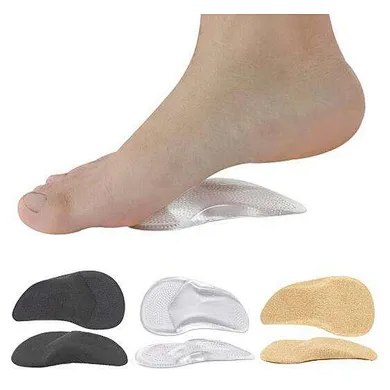
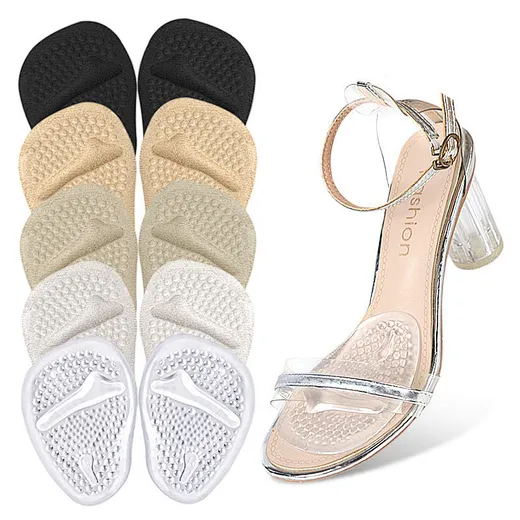
1. Ball-of-Foot Cushions
These small, strategically placed pads target the area of greatest pressure. Available in various materials:
- Silicone gel pads: Offer superior shock absorption and non-slip properties
- Foam metatarsal pads: Provide gentle lifting of the metatarsal bones
- Combination designs: Feature both cushioning and protective barriers
Best For:
Stiletto heels and pumps where focal pressure points cause the most discomfort.
2. Full-Length Insoles
These provide comprehensive coverage and support throughout the entire footbed:
- 3/4 length insoles: Offer full support without crowding the toe box
- Arch support inserts: Specifically designed to prevent arch strain
- Heel-to-toe designs: Complete coverage for maximum comfort
Best For:
Platform heels, wedges, and block heels where more surface area is available for support.
3. Specialized Heel Liners
These target heel-specific issues:
- Heel grips: Prevent slipping and rubbing
- Impact-absorbing heel pads: Cushion the heel strike
- Achilles tendon protectors: Shield the sensitive back of the heel
Choosing the Right Insole for Your Heel Type and Foot Shape
Matching Insole to Heel Height
- Low heels (1-2 inches): Full-length cushioning with moderate arch support
- Medium heels (2-3 inches): Metatarsal pads with arch support
- High heels (3+ inches): Strategic ball-of-foot cushions with heel protection
Considerations for Different Foot Types
- High arches: Require substantial arch support and cushioning
- Flat feet: Benefit from stability features and even pressure distribution
- Wide feet: Need low-profile designs that won't crowd the shoe
- Narrow feet: Require secure adhesion to prevent shifting
Expert Insights: Podiatrist Recommendations
Professional Guidance on High Heel Comfort
Dr. Emily Robertson, DPM, a board-certified podiatrist specializing in biomechanics, emphasizes:
"The ideal high heel insole doesn't just cushion—it redistributes pressure and provides strategic support to maintain natural foot alignment as much as possible within the constraints of elevated footwear. I recommend looking for insoles with a metatarsal dome that lifts and separates the metatarsal bones, reducing compression of the nerves that often leads to pain."
Podiatrist-Approved Features to Look For:
- Medical-grade materials that won't degrade quickly
- Adhesive backing that secures without residue
- Breathable designs that prevent moisture buildup
- Hypoallergenic properties for sensitive skin
Proper Application and Maintenance of High Heel Insoles
Correct Placement for Maximum Effectiveness
Proper positioning is crucial for comfort and function:
- Ball-of-foot pads: Place directly behind the ball of the foot, not under it
- Full-length insoles: Ensure they lie flat without buckling or wrinkling
- Heel grips: Position to prevent vertical slippage without lifting the heel too high
Maintenance and Replacement Guidelines
- Cleaning: Hand wash with mild soap and air dry
- Replacement timeline: Every 3-6 months with regular use
- Adhesive refresh: Use double-sided fashion tape when original adhesive weakens
- Storage: Keep in a cool, dry place away from direct sunlight
Frequently Asked Questions About High Heel Insoles
1. Can insoles make my high heels feel like flat shoes?
While they can't completely replicate the comfort of flats, quality insoles can significantly reduce discomfort and extend your wearing time by hours.
2. Will insoles make my shoes feel tighter?
Some thickness is inevitable, but low-profile designs specifically made for high heels minimize this effect. If your shoes are already tight, consider going up a half size when purchasing heels you plan to wear with insoles.
3. How do I prevent my insoles from slipping?
Choose insoles with quality adhesive backing and ensure your shoes are clean and dry before application. Some brands offer "stickier" options for smooth-lined shoes.
4. Can I transfer insoles between different pairs of heels?
Technically yes, but repeated removal will compromise the adhesive. It's better to dedicate insoles to specific shoe pairs or choose non-adhesive options if you plan to move them frequently.
5. Are there insoles for open-toe heels?
Yes! 3/4 length insoles and strategically placed pads work well with open-toe designs without being visible.
6. Do high heel insoles work for all types of heels?
While most are versatile, some designs work better with specific heel types. Ball-of-foot pads excel in stilettos, while full-length insoles work better in closed-toe pumps and wedges.
Conclusion: Step Confidently Into Comfort
High heel comfort insoles represent a revolutionary approach to footwear comfort, transforming the comfort once sacrificed for fashion into an experience that blends elegance and comfort. By understanding the specific challenges high heels pose to foot biomechanics and choosing the right insole solution to address these challenges, you can significantly extend your wear time and reduce both immediate discomfort and long-term damage.
The key to success lies in selecting the right insole type for your footwear and foot shape, using and caring for it correctly, and knowing when it needs to be replaced. Advances in materials science and design have enabled today's high-heel insoles to offer advanced solutions that go far beyond simple cushioning and can actually improve foot biomechanics, even within the constraints of fashionable footwear.
Remember, while insoles can significantly improve comfort, they work best as part of a comprehensive foot care strategy that includes appropriate heel height, regular stretching, and proper shoe rotation. By investing in high-quality insoles and following the guidance provided, you can enjoy your favorite high heels with greater comfort and confidence, knowing you're taking proactive steps to protect your foot health while expressing your personal style.


High Heel Insoles: Revolutionizing Comfort in Style Footwear
Shoe Insoles for Bunions: Your Path to Pain-Free Movement