Best Insoles for High Heels: The Ultimate Guide to Comfort and Style

Discover the best insoles for high heels designed for stylish comfort. Our slim-profile inserts provide arch support, metatarsal padding, and heel cushioning to reduce pain in stilettos and pumps. Enjoy all-day wearability without compromising style.
Best Insoles for High Heels: The Ultimate Guide to Comfort and Style
Table of Contents
Why High Heels Cause Discomfort
High heels shift your body weight forward, increasing pressure on the ball of your foot by up to 75% or more. This abnormal weight distribution causes several issues:
Biomechanical Stress Points
When wearing heels, your center of gravity shifts forward, forcing your feet, ankles, and knees to compensate. This creates:
- Excessive pressure on the forefoot leading to metatarsalgia
- Shortened Achilles tendon causing strain and discomfort
- Altered spinal alignment that can lead to back pain
Common High Heel Problems
Bunions and Hammertoes
The narrow toe box in many high heels squeezes toes together, potentially causing painful deformities over time.
Plantar Fasciitis
The elevated heel places constant tension on the plantar fascia, potentially leading to inflammatory heel pain.
Balance Issues
Higher heels decrease stability, increasing the risk of ankle sprains and falls.
How Insoles Transform Your High Heel Experience
Specially designed high heel insoles address these issues through strategic support and cushioning:
Pressure Redistribution
Quality insoles transfer pressure away from sensitive areas like the ball of the foot, dispersing it more evenly across the entire footbed.
Shock Absorption
Advanced materials like medical-grade gel and memory foam absorb impact with each step, reducing joint stress.
Improved Alignment
Some insoles feature arch support that helps maintain better foot positioning, reducing strain on ankles and knees.
Enhanced Stability
Textured surfaces and grip technologies prevent foot slippage inside the shoe, improving balance and confidence.
Types of High Heel Insoles
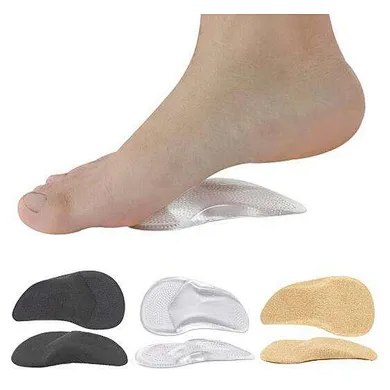
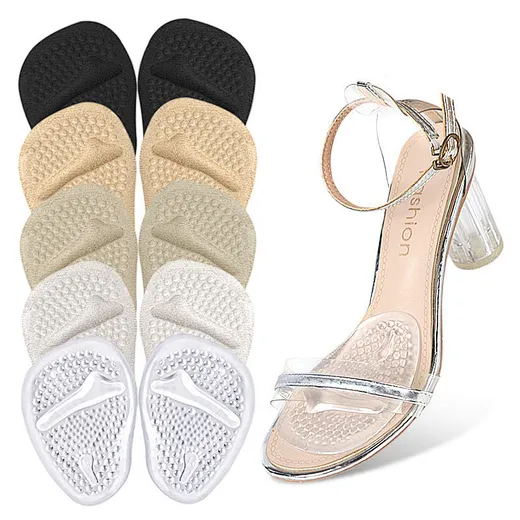
Forefoot Pads/Cushions
Description
These small, strategically placed cushions target the ball of the foot where pressure is most concentrated.
Best For
Pumps and shoes with minimal interior space. Ideal for moderate heel heights (2-3 inches).
Key Features
- Gel or foam construction
- Adhesive backing for secure placement
- Low profile design
3/4 Length Insoles
Description
These insoles cover from heel to ball of foot, providing comprehensive support without crowding the toe box.
Best For
Medium to high heels (3-4 inches) where toe space is limited but full support is needed.
Key Features
- Arch support built into design
- Deep heel cup for stability
- Trimmable for custom fit
Full-Length Insoles
Description
Complete footbed replacements that offer maximum cushioning and support throughout the entire shoe.
Best For
Wide-fit heels, platforms, or shoes with removable existing insoles.
Key Features
- Superior shock absorption
- Contoured arch support
- Moisture-wicking properties
Specialty Insoles
Metatarsal Pads
These small pads sit just behind the ball of the foot to lift and support the metatarsal arch, relieving nerve pressure.
Heel Grippers
Prevent slippage and rubbing at the back of the shoe, reducing blister formation.
Choosing the Right Insole for Your Heels
Consider Heel Height
Low heels (1-2 inches): Basic cushioning may suffice.
Medium heels (2-3 inches): Look for support with moderate arch elevation.
High heels (4+ inches): Prioritize maximum forefoot cushioning and stability features.
Evaluate Shoe Design
Open-Back vs. Closed-Back
Open-back heels may require gripper pads to prevent slippage, while closed-back designs can accommodate fuller insoles.
Toe Box Shape
Pointed toes need low-profile solutions, while rounded toes can accommodate more substantial support.
Assess Your Needs
All-Day Wear
Choose gel-based cushions with superior shock absorption for extended wear.
Special Occasions
Adhesive forefoot pads provide targeted relief without altering shoe fit significantly.
Existing Foot Conditions
Those with plantar fasciitis should seek insoles with arch support, while those with bunions need wide, soft platforms.
Expert Advice on High Heel Comfort
Podiatrist Recommendations
Dr. Emily Sanders, DPM, emphasizes: "The right insole can make even high heels more biomechanically friendly. Look for materials that provide both cushioning and support, and avoid anything that makes your shoes feel too tight, as this can create new pressure points."
Fashion Stylist Insights
Celebrity stylist Maria Rodriguez advises: "Insoles are the secret weapon of red carpet regulars. We use specially trimmed 3/4 length insoles in evening shoes to add comfort without compromising style. The key is finding the balance between support and maintaining the shoe's original fit."
Long-Term Foot Health
According to the American Podiatric Medical Association, "While no insole can make high heels completely orthopedically neutral, strategic cushioning and support can significantly reduce their negative impacts when worn occasionally."
Frequently Asked Questions
How do I install insoles in high heels?
First, remove any existing insoles if possible. For adhesive pads, clean the surface thoroughly before application. For full or 3/4 length insoles, ensure they're properly positioned and trim if necessary to fit your shoe size.
Can insoles make my shoes too tight?
Yes, this is a common issue. Always consider insole thickness when purchasing. If your shoes are already snug, opt for low-profile solutions like adhesive pads rather than full insoles.
How long do high heel insoles last?
Depending on quality and frequency of use, most insoles last 3-6 months. Gel pads may need replacement more frequently if they lose their cushioning properties.
Are there insoles for extremely high heels?
Yes, some companies specialize in insoles for stilettos and very high heels. These typically feature extra-thick forefoot padding and may include metatarsal support.
Can I use the same insoles in different shoes?
While possible, it's not recommended as insoles mold to specific shoes over time. Transferring them may reduce effectiveness and cause premature wear.
Do insoles help with balance in high heels?
Yes, insoles with arch support and grip features can significantly improve stability by preventing foot slippage and providing a more secure platform.
Conclusion
High heel insoles are far more than simple comfort accessories—they're engineering solutions to biomechanical problems. By strategically addressing pressure points, improving alignment, and absorbing shock, quality insoles can transform your experience of wearing heels. Whether you choose simple adhesive pads or full-length orthotic inserts, the right insole solution allows you to embrace style without sacrificing comfort or foot health. Remember that even with the best insoles, moderation remains key to long-term foot health. Reserve your highest heels for special occasions and always listen to your body's signals when it's time to give your feet a break.


A Synonym for Hallux Valgus Is "Bunion": A Comprehensive Guide to Causes and Orthotic Management
Do Toe Separators Work for Bunions? Evidence-Based Insights and Complementary Solutions